Dapoxetine: the measured 1.59-minute difference
A 2014 meta-analysis of six randomised trials in 5,934 men: intravaginal ejaculatory latency time improved by a mean of 1.59 minutes against placebo, with treatment-emergent adverse events in 50.5% against 27.9%. This page reads the pooled numbers, the on-demand pharmacology, and a real-world cohort.
13 October 2026 · 4 min read
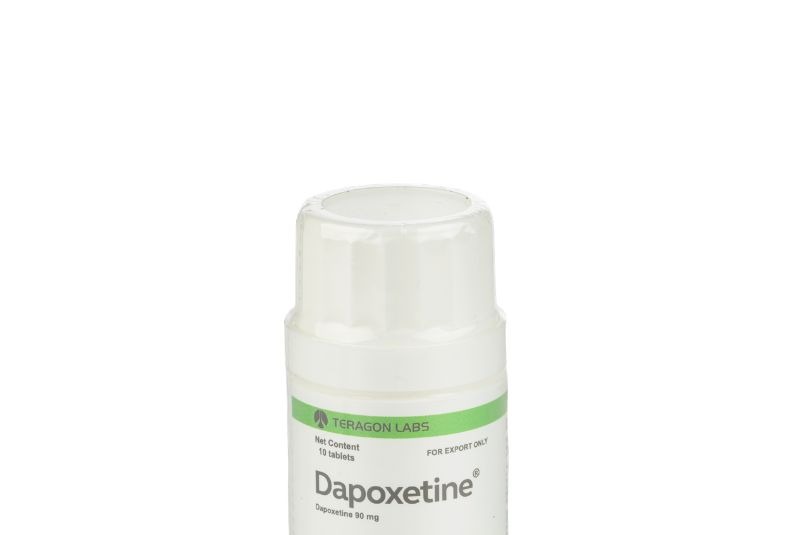 Dapoxetine 90 mg (Dapoxetine – Tablets)
Dapoxetine sits in an unusual place in this catalog: it is one of the very few compounds here with a large, clean, modern randomised evidence base, and one of the few where the honest summary of that evidence is a small number. Both of those things are true at once, and this page is mostly about the number.
The pooled result
A 2014 meta-analysis in Clinical Therapeutics pooled six randomised controlled trials comparing dapoxetine with placebo in men with premature ejaculation, 5,934 patients in total. The primary outcome was intravaginal ejaculatory latency time, measured with a stopwatch.
The result: mean difference in IELT 1.59 minutes in favour of dapoxetine (95% CI 1.30 to 1.88), p<0.00001. The 60 mg dose was more beneficial than the 30 mg dose for IELT, mean difference -0.47 minutes (95% CI -0.73 to -0.20), p=0.0005.
That is the whole efficacy headline, and it is a statistically unambiguous result on a large sample. It is also 95 seconds. Whether that matters to a given person is not a question the meta-analysis answers, and a page that reported only the 1.59 would be as misleading as one that reported only that it is small.
The safety side of the same analysis is the other half of the finding. Treatment-emergent adverse events occurred in 50.5% of the dapoxetine group against 27.9% of placebo — nearly twice as often. Reports of severe adverse events were rare, and the listed common events were nausea, dizziness, diarrhoea, insomnia and headache. The authors’ conclusion is that the overall safety profile is acceptable, which is a different claim from “mild”.
Why the pharmacology is unusual
A 2010 review in Expert Opinion on Pharmacotherapy lays out the profile. Dapoxetine is a potent selective serotonin reuptake inhibitor, administered on demand 1-3 hours before planned sexual contact. It is rapidly absorbed and rapidly eliminated, so there is minimal accumulation, and its pharmacokinetics are dose-proportional and unaffected by repeated dosing.
That last property is the whole design rationale, and it is what separates dapoxetine from the off-label SSRIs that were standard practice before it. The 2010 review describes the situation at the time as a substantial unmet treatment need arising precisely because the off-label antidepressant SSRIs accumulate: a daily drug for a situation that occurs on demand. It also reports dapoxetine 30 mg and 60 mg evaluated in five randomised, double-blind, placebo-controlled studies in 6,081 men aged 18 and over, with mean IELT, all Premature Ejaculation Profile items and the clinical global impression of change improving significantly against placebo at p<0.001 for all, and no SSRI class-related effects on validated rated scales.
What happened outside the trial
A 2020 real-world study from a single centre followed 154 patients treated for four weeks and recorded the clinician global impression of change, the Premature Ejaculation Profile, the estimated IELT and the estimated number of intravaginal thrusts before ejaculation. Mean estimated IELT went from 1.0±0.7 min at baseline to 2.4±1.6 min after four weeks, p<0.001, and mean thrusts from 37.4±28.6 to 85.9±61.9, p<0.001. Seventy point one percent of patients self-rated at least “slightly better”. Adverse effects were reported as acceptable.
Two things are worth noticing in that study. First, there is no placebo arm — it is a before-and-after in motivated patients who paid for and waited for treatment, which is the design most flattering to any intervention in this field. Second, the patients whose treatment failed (CGIC=0) differed significantly at baseline from those who improved, in baseline thrust count (p=0.010) and in the PEDT score (p=0.009). The failures were not random: the severity at baseline predicted the outcome, which is exactly what the placebo-controlled numbers have to be read against.
The trials also exist in context. A 2012 crossover study in Urology on tramadol for lifelong premature ejaculation — sixty patients, single-blind, placebo-controlled, 60-second IELT threshold in 90% of intercourse episodes — noted that SSRIs such as dapoxetine are now the more popular option, and framed tramadol as a possible alternative. It is a reminder that the comparisons in this field are not all against placebo.
What the data do not show
They do not show a large effect. The pooled IELT difference is 1.59 minutes and the 60-versus-30 mg increment is under half a minute. Anyone reading this page for a different number will not find it here, because the meta-analysis of 5,934 men does not print one.
They do not show what a specific individual will experience. The real-world cohort shows that severity at baseline predicted who improved and who did not, which means the population average conceals a responder pattern. That is a more useful fact than the average, and it is the one most often left out.
They do not show a clean tolerability picture. Fifty point five percent versus 27.9% is a real difference in how many people feel something, even when severe events are rare. “Rare severe events, common mild events” is a different proposition from “well tolerated” in the sense most readers take it.
They do not show an approval everywhere. The 2014 meta-analysis opens by noting dapoxetine is the first oral agent approved for premature ejaculation and immediately adds that some countries have not approved its use. The 2010 review frames pre-approval practice as off-label SSRI use. Regulatory status varies by market, and that is a fact about the drug’s history, not about its mechanism.
They do not show that anything on this shelf transfers to any other use. Dapoxetine is a serotonin reuptake inhibitor with an on-demand pharmacokinetic profile designed around one specific clinical situation. Every efficacy number above was produced in men with that diagnosis, under a supervised protocol, with a stopwatch.
Where this sits on the shelf
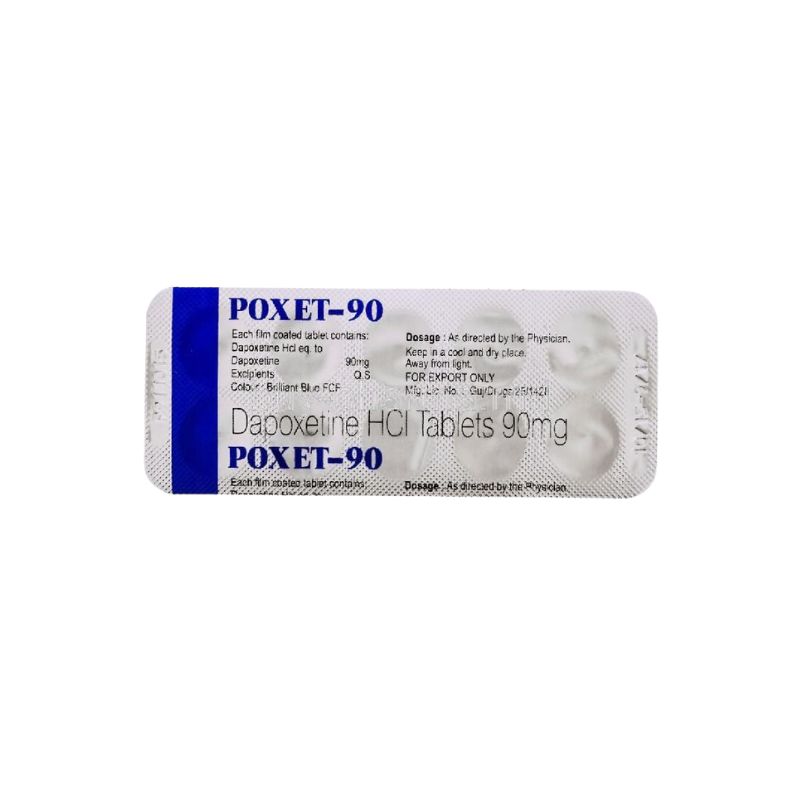
The compounds as supplied by the manufacturer: Dapoxetine 90 mg · Poxet 90 mg
What we supply
The dapoxetine preparations above, as supplied by the manufacturer, tracked, from inside the EU.
Research use only. This page summarises published studies for research reference. It is not medical advice, not a protocol, and not a suggestion for human use. Nothing we supply is for human or veterinary use.
References.
- Li J, Yuan H, et al. Dapoxetine for premature ejaculation: an updated meta-analysis of randomized controlled trials. Clin Ther 2014;36(12):2003-2014.
- McMahon CG. Dapoxetine for premature ejaculation. Expert Opin Pharmacother 2010;11(10):1741-1752.
- Peng J, Fang D, et al. Efficacy of dapoxetine treatment in Chinese patients with premature ejaculation and possible factors affecting efficacy in the real-world practice. BMC Urol 2020;20(1):11.
- Kaynar M, Kilic O, et al. On-demand tramadol hydrochloride use in premature ejaculation treatment. Urology 2012;79(1):145-149.