Sildenafil: the trials in order, and what they actually asked
Twenty-seven randomised trials and 6,659 men, pooled: successful intercourse in 57% of attempts versus 21% on placebo. The 2002 meta-analysis is the most defensible summary of the drug, and the withdrawal arm of a 2000 trial is the most overlooked fact about it.
1 November 2026 · 4 min read
 Careforce-150 (Sildenafil 150 mg)
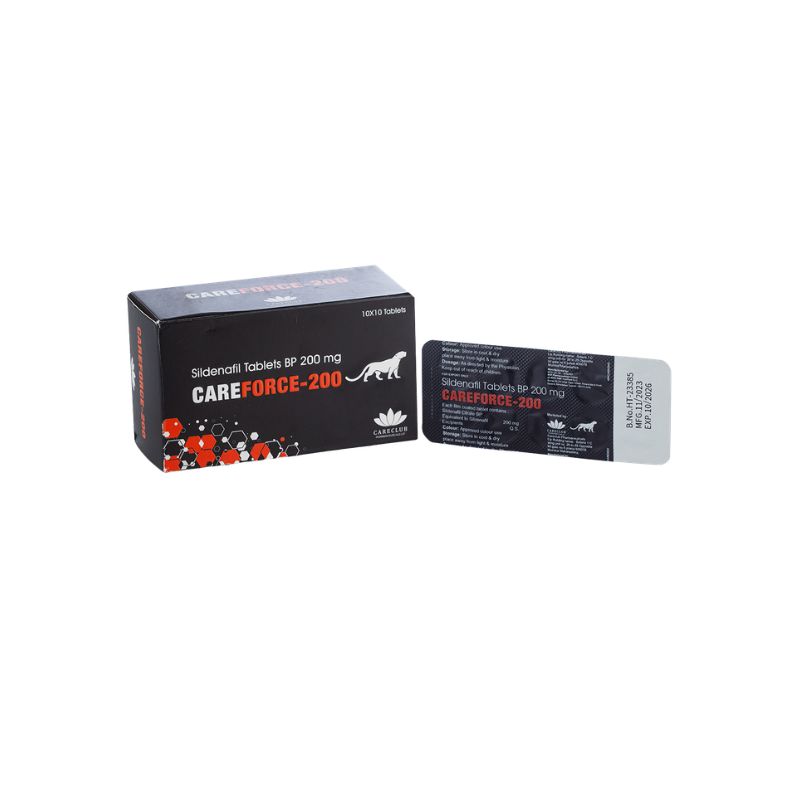
Sildenafil has more randomised evidence behind it than almost any other drug sold in this catalogue, and most of the public writing about it is far vaguer than the literature. The 2002 systematic review in Archives of Internal Medicine is the cleanest single source: twenty-seven trials, 6,659 men, and a pre-specified rule that only randomised, comparator-controlled trials of at least seven days’ duration qualified. This page is organised around what that review actually measured, because the headline everyone quotes is not the number the review leads with. The products discussed are the sildenafil citrate preparations supplied in this catalogue — including Careforce 200 mg.
What the primary endpoint was
The review’s primary synthesis came from 14 parallel-group, flexible as-needed dosing trials, covering 2,283 men, and asked a behavioural question rather than a physiological one: what share of intercourse attempts succeeded.
- Successful intercourse attempts: 57% on sildenafil, 21% on placebo. Weighted mean difference 33.7 (95% CI 29.2–38.2).
- Men achieving at least one successful intercourse during treatment: 83% versus 45%, a relative benefit increase of 1.8 (95% CI 1.7–1.9), across 2,205 men.
Those are the two numbers worth carrying. The first is a ratio applied to attempts; the second is a share of people. They answer different questions and are frequently run together.
The dose finding, stated carefully
The review reports the dose result in one sentence and it deserves to be quoted rather than paraphrased into something stronger. From six parallel-group fixed-dose trials, it states that efficacy appeared slightly greater at higher doses.
Two words carry the weight: appeared and slightly. Six trials is a small evidence base for a dose-response curve, and the review does not present a specific threshold, an optimal dose, or a curve. Anyone telling you the trials identified “the right dose” is reading something into the review that the review does not say.
The trial that is usually cited for a practical ceiling is older and separate. In the 2000 withdrawal study, open-label treatment used a 10–100 mg range. That is the range that study exercised, not a finding that higher doses do not work.
Tolerability, with the denominators attached
The review’s adverse event table is the most useful thing in the paper, because it is the rare place where the denominator is stated next to the percentage:
- flushing 12%
- headache 11%
- dyspepsia 5%
- visual disturbances 3%
and all of these were significantly less likely on placebo. On the safety question that gets asked most, the review states sildenafil was not significantly associated with serious cardiovascular events or death across the pooled trials.
Retention is the detail that surprises people. In the flexible-dosing trials, men randomised to sildenafil were less likely than those on placebo to drop out for any reason, and no more likely to drop out because of an adverse event or a laboratory abnormality. A drug with a 12% flushing rate produced fewer discontinuations than a sugar pill, because it did something.
The trial nobody mentions: withdrawal
The 2000 study is a small one — 233 men, open-label 16 weeks, then eight weeks of double-blind randomisation to placebo or continuation. Its open-label result is unremarkable on its own: 200 of 216 patients (93%) reported improved erections, and 28 (12%) discontinued.
The randomised withdrawal arm is what makes it worth reading. In the sildenafil group, the significant improvements in the frequency and duration of erections were maintained. In the men switched to placebo, those measures returned to pre-treatment values (both comparisons p < 0.0001).
That is a statement about ongoing pharmacology, not about habit or expectation: the effect leaves when the drug leaves. The authors state the conclusion plainly — for most patients, treatment must be continued for the improvements in erectile function to be maintained. Only two patients (1%) were withdrawn from the study for lack of efficacy.
What was measured that is not erectile function
The 2006 trial asked a different question entirely and is often cited for the wrong one. Across Mexico, Brazil, Australia and Japan, sildenafil significantly improved self-esteem, confidence, sexual relationship satisfaction and overall relationship satisfaction versus placebo (all p < 0.0001). Those measures correlated with erectile function, with the frequency of erections permitting satisfactory intercourse, and with global treatment efficacy.
What it did not do is test whether sildenafil prevents cardiovascular events. The review covered that ground separately and found no significant association with serious cardiovascular events or death — which is a statement about safety during treatment, not a claim of cardiovascular benefit. The distinction matters and the internet has largely collapsed it.
What this record does not show
Not a dose-finding study. Six fixed-dose trials, described by the review itself in hedged language.
Not a head-to-head against other classes. The synthesis is sildenafil versus placebo. Comparisons against tadalafil and vardenafil are a different literature, covered on their own pages.
Not a cardiovascular benefit. Safety finding, not efficacy finding.
Not a cure. The withdrawal arm is unambiguous about persistence.
What we supply
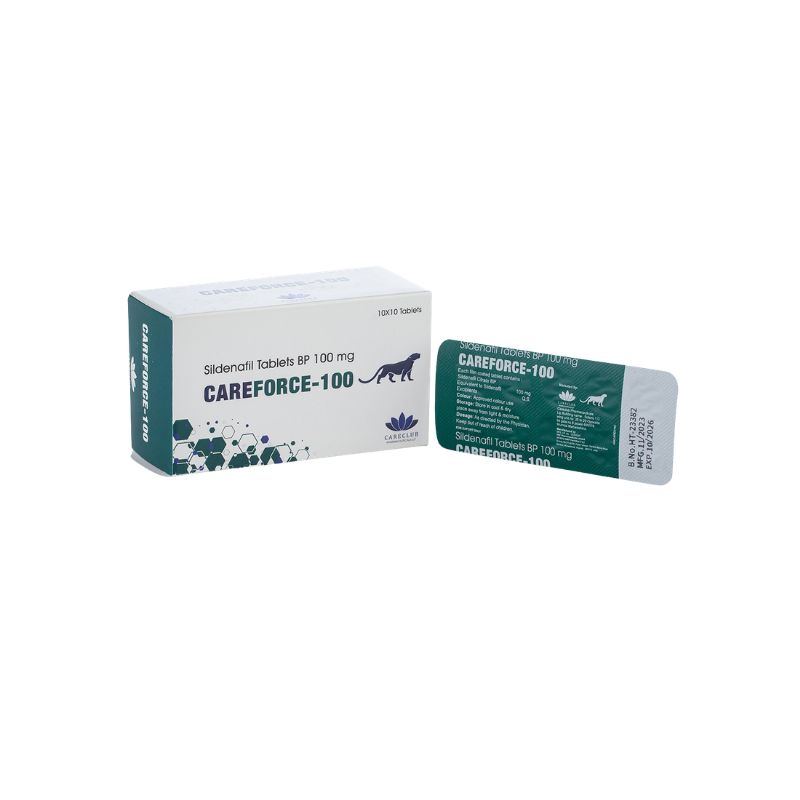
The sildenafil citrate preparations in this catalogue, including Careforce 100 mg and the 200 mg presentation, as supplied by the manufacturer, tracked, from inside the EU. Batch documentation for every product that carries any is explained in the COA guide linked from the product page.
Research use only. This page summarises published randomised-trial evidence for research reference. It is not medical advice and not a suggestion for human use. Prescription medicines require a valid prescription issued by a licensed prescriber who will assess the individual patient; nothing here substitutes for that assessment. Nothing we supply is for human or veterinary use.
References.
- Fink HA, Mac Donald R, Rutks IR, Nelson DB, Wilt TJ. Sildenafil for male erectile dysfunction: a systematic review and meta-analysis. Arch Intern Med 2002;162(12):1349-1360 (PMID 12076233).
- Christiansen E, Guirguis WR, Cox D, Osterloh IH; Sildenafil Multicentre Study Group. Long-term efficacy and safety of oral Viagra (sildenafil citrate) in men with erectile dysfunction and the effect of randomised treatment withdrawal. Int J Impot Res 2000;12(3):177-182 (PMID 11045912).
- Althof SE, O'leary MP, Cappelleri JC, et al. Sildenafil citrate improves self-esteem, confidence, and relationships in men with erectile dysfunction: results from an international, multi-center, double-blind, placebo-controlled trial. J Sex Med 2006;3(3):521-529 (PMID 16681478).