Trenbolone acetate, enanthate and hexahydrobenzylcarbonate: what the esters do, and the thinness of the human record
Esterifying a steroid changes how fast it leaves the injection site and how often it has to be given; it does not change which receptor the active form hits. On trenbolone specifically, the published human record is thin and the best human source says so. A 2024 review of adverse effects states that many effects remain unknown and that poly-anabolic-steroid use confounds the literature. The Ames and micronucleus work concluded trenbolone was devoid of genotoxic activity. No head-to-head human pharmacokinetic comparison of the three esters is on this page, because none was found.
31 October 2026 · 4 min read
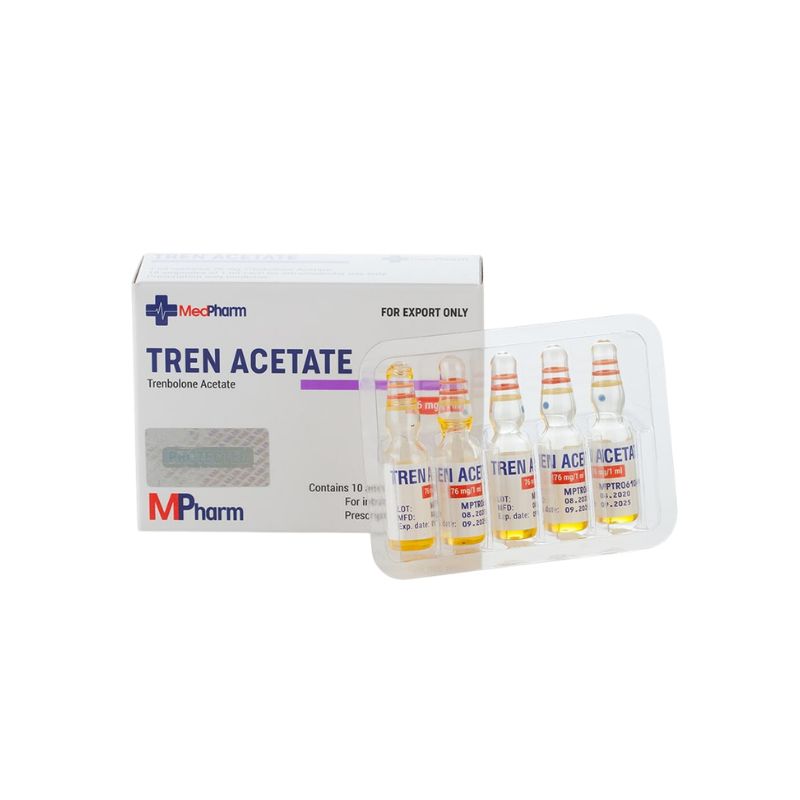 Tren Acetate (Trenbolone Acetate)
Three trenbolone presentations on this shelf, one page. What separates them is a single chemical modification — the ester attached to the 17-hydroxyl group — and what that modification does is govern release from the depot and dosing interval. Everything downstream of that is the same molecule doing the same thing.
What an ester changes
Trenbolone is a synthetic analogue of testosterone belonging to the nandrolone group, with a strong anabolic effect and a limited androgenic effect. In its free 17β-hydroxy form it is short-lived; esterifying the hydroxyl — acetate, enanthate, hexahydrobenzylcarbonate — creates a lipophilic prodrug that is hydrolysed back to the active steroid at the injection site and in plasma. The ester is what lets a millilitre of solution cover a multi-day interval instead of hours. It is a delivery decision, not a receptor decision.
A 2020 zebrafish paper on the active metabolite is worth noting for the same reason it is included: it states that 17β-trenbolone is one of the dominant metabolites of trenbolone acetate, which is applied in beef cattle operations around the globe. The ester really is a delivery form, and the free steroid is what the body works with.
The human record, and the review that admits its limits
The most useful human-facing source on this page is a 2024 review in Endokrynologia Polska covering the adverse effects of trenbolone on the nervous, reproductive and immune systems and on breast, muscular and adipose tissue. It is blunt about the state of the evidence:
- Trenbolone and other anabolic-androgenic steroids “are harmful, with 90% of users experiencing injurious side effects.”
- Severe acne and gynaecomastia affect approximately one-third of all users, along with excessive body hair, stretch marks, hypertension and cardiac arrhythmia.
- Steroid use is also subject to contamination, frequently resulting in local inflammation at the injection site, muscle adhesions and fibrosis, nerve damage and, in extreme cases, necrosis of the injection site.
- And the sentence that governs the rest of this page: “due to the lack of available knowledge on the subject, many of the effects of trenbolone use remain unknown. Moreover, the fact that multiple AASs may be used simultaneously presents a significant problem in their study.”
That last sentence is the methodological core of the whole problem with this literature. Co-use is the norm in the population, so observational reports cannot attribute an effect to one compound. It is why there is no clean human efficacy trial of any trenbolone ester on this page and why this page does not present one as a gap that is merely waiting to be filled.
The genotoxicity work, which reached a clear conclusion
A 1991 paper in Annales de Recherches Vétérinaires tested trenbolone in a number of genotoxicity systems — in vitro and in vivo, for gene mutations, chromosomal mutations and primary DNA damage. Only two tests came back positive or dubious: the in vitro micronucleus test in SHE cells, which was negative in two other cell lines (C3H and CHO), and the Ames test in 1 of 5 studies, which found a positive result in TA100 strain without metabolic activation. Repetition of that Ames study with pure trenbolone showed no genotoxic activity. The paper’s conclusion: trenbolone was considered to be devoid of genotoxic activity.
That is a narrow and clearly stated conclusion — it is a statement about genotoxicity in those test systems, not about the whole toxicity profile.
What the data do not show
They do not show a head-to-head human pharmacokinetic comparison of trenbolone acetate, enanthate and hexahydrobenzylcarbonate. None is cited on this page because none was found, and this page does not describe the relative release profiles as though a source did.
They do not show a controlled human trial of muscle mass or strength on any trenbolone ester. The human source here is an adverse-effects review.
They do not show a cardiovascular outcome. The 90% figure and the one-third figure are proportions of users in a review, not rates from a defined denominator in a trial, and the abstract does not state a sample size or a follow-up period for either.
They do not show an effect in the 2020 zebrafish work. That study exposed embryos to environmentally realistic 17β-trenbolone concentrations of 1, 10 and 50 ng/L and found disturbed motoneuron distribution, downregulation of motoneuron development-related genes and reduced locomotion at 10 and 50 ng/L, with melatonin able to recover the deficits. Zebrafish embryos are not a model of trenbolone use.
One catalogue note, stated as a limit rather than as guidance: the acetate and enanthate presentations here are 100 mg/ml and 200 mg/ml respectively in 10 × 1 ml ampoules, and the blend is a 10 × 1 ml presentation. Those are concentrations and pack formats. No abstract cited on this page prints a dosing interval for any trenbolone ester, so this page cannot say what those numbers correspond to in terms of how often anything is given.
Where this sits on the shelf
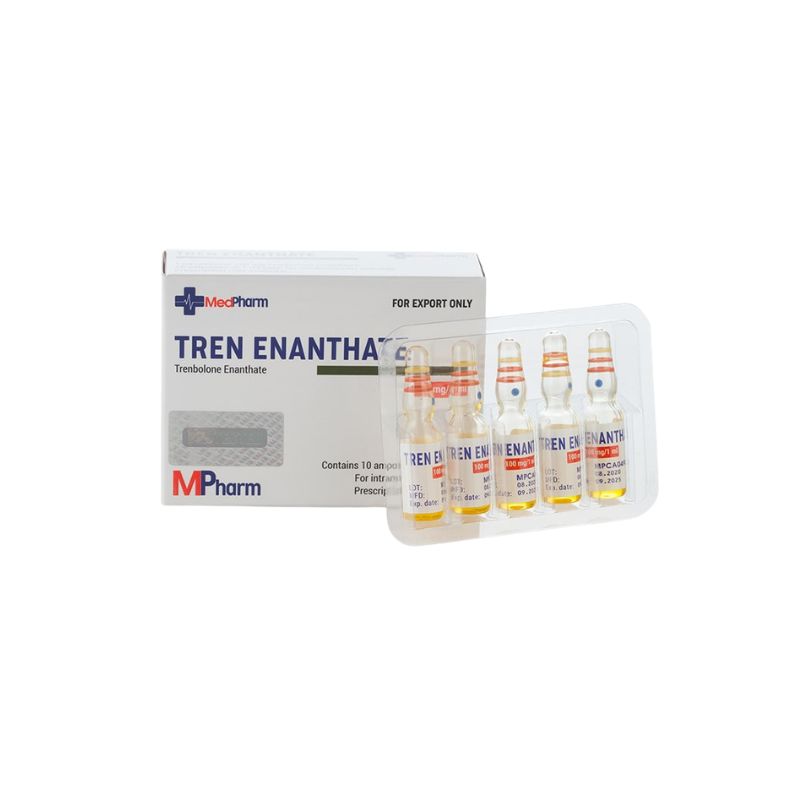
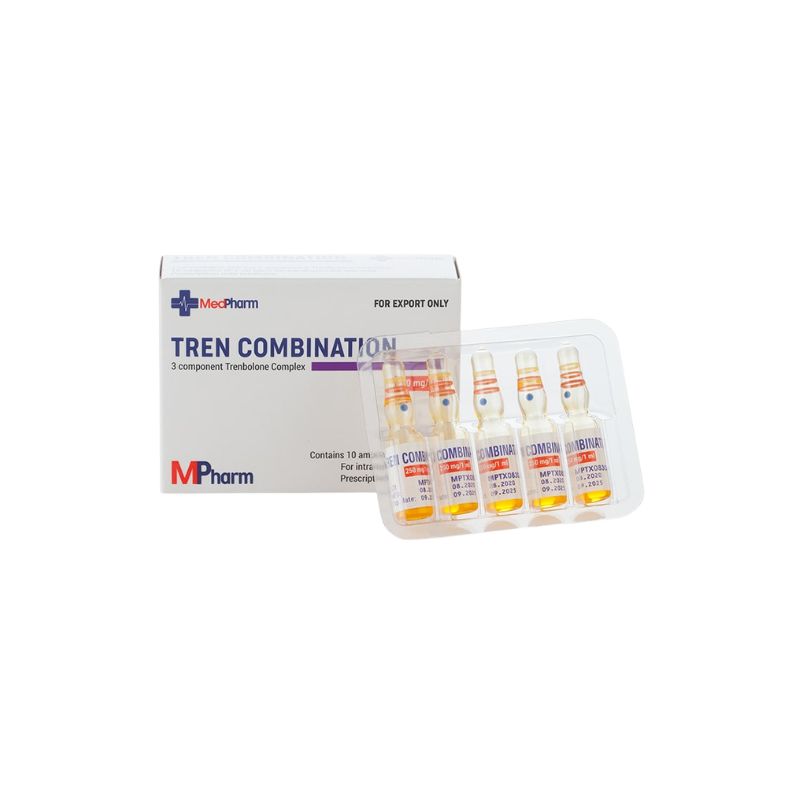
The compounds as supplied by the manufacturer: Tren Acetate (Trenbolone Acetate) · Tren Enanthate (Trenbolone Enanthate) · Tren Combination (Trenbolone Blend)
What we supply
The trenbolone presentations above, as supplied by the manufacturer, tracked, from inside the EU.
Research use only. This page summarises published studies for research reference. It is not medical advice, not a protocol, and not a suggestion for human use. Nothing we supply is for human or veterinary use.
References.
- Borecki R, Byczkiewicz P, Słowikowska-Hilczer J. Impact of trenbolone on selected organs. Endokrynol Pol. 2024;75(3):267-278.
- Marzin D. Trenbolone: application of the Ames test. Recent data. Ann Rech Vet. 1991;22(3):257-62.
- Mi P, Gao Q, Feng ZY, et al. Melatonin attenuates 17β-trenbolone induced insomnia-like phenotype and movement deficiency in zebrafish. Chemosphere. 2020 Aug;253:126762.