Sildenafil in pulmonary arterial hypertension: what the SUPER trial measured
In 278 patients with symptomatic pulmonary arterial hypertension, sildenafil three times daily for 12 weeks improved the six-minute walk by a placebo-corrected 45, 46 and 50 metres at 20, 40 and 80 mg. All doses reduced mean pulmonary-artery pressure and improved WHO functional class. The incidence of clinical worsening did not differ from placebo, and the trial was not powered for mortality. Read that list, not the first two lines.
26 October 2026 · 4 min read
 Careforce-150 (Sildenafil 150 mg)
Sildenafil inhibits phosphodiesterase type 5, an enzyme that metabolises cyclic guanosine monophosphate, thereby enhancing the cGMP-mediated relaxation and growth inhibition of vascular smooth-muscle cells — including those in the lung. That is the mechanism sentence, and it is the reason the same molecule was studied in two entirely different diseases: erectile dysfunction, where the target is penile vasculature, and pulmonary arterial hypertension, where it is pulmonary vasculature.
This page is about the second indication, because the trials there are large and randomised.
The SUPER trial: 278 patients, 12 weeks
The 2005 New England Journal of Medicine paper randomised 278 patients with symptomatic pulmonary arterial hypertension — either idiopathic, or associated with connective-tissue disease, or with repaired congenital systemic-to-pulmonary shunts — to placebo or sildenafil at 20, 40 or 80 mg orally three times daily for 12 weeks. The primary endpoint was the change from baseline to week 12 in distance walked in six minutes.
The distance walked increased from baseline in all sildenafil groups. The mean placebo-corrected treatment effects were:
- 45 m (+13.0 percent) at 20 mg
- 46 m (+13.3 percent) at 40 mg
- 50 m (+14.7 percent) at 80 mg
with P<0.001 for all comparisons.
All three doses reduced mean pulmonary-artery pressure, at P=0.04, P=0.01 and P<0.001 respectively, and improved WHO functional class, at P=0.003, P<0.001 and P<0.001. Side effects included flushing, dyspnoea-free dyspepsia and diarrhoea.
Now the two results that are usually left out of the summary. The incidence of clinical worsening did not differ significantly between sildenafil and placebo. And the study was not powered to assess mortality. Patients completing the 12-week randomised study could enter a long-term extension, and among the 222 patients completing one year of sildenafil monotherapy the improvement from baseline at one year in the six-minute walk was 51 m.
Read the dose-response next to the clinical-worsening null. Three doses from 20 to 80 mg three times daily produced a walk-distance effect that barely moves — 45, 46 and 50 metres — and a placebo that produced the same rate of clinical worsening.
The 12-patient companion study, and what it is
A 2005 British Journal of Haematology paper evaluated sildenafil in 12 patients with sickle cell disease and pulmonary hypertension, after optimising their sickle cell therapy to stabilise haemoglobin and fetal haemoglobin levels. There was no control group and no randomisation.
Sildenafil for a mean duration of 6 ± 1 months decreased estimated pulmonary artery systolic pressure from 50 ± 4 to 41 ± 3 mmHg — a difference of 9 mmHg, 95% CI 0.3-17, P = 0.043 — and increased the six-minute walk distance from 384 ± 30 to 462 ± 28 m, a difference of 78 m, 95% CI 40-117, P = 0.0012. Transient headache occurred in two patients and transient eyelid oedema in four. No episodes of priapism occurred in the three men in the study.
The walk-distance change of 78 m is more than double the placebo-corrected effect in SUPER. It is also uncontrolled, in twelve people, in a different disease. Both facts belong in the same sentence, and the authors’ own conclusion is that placebo-controlled phase II/III trials are warranted.
What the long-term record does not say
What the data do not show
They do not show a mortality benefit. The trial states it was not powered to assess mortality, and no abstract cited here reports a survival difference.
They do not show a reduction in clinical worsening. The incidence of clinical worsening did not differ significantly from placebo.
They do not show a proportional walk-distance response to dose. 20, 40 and 80 mg three times daily gave 45, 46 and 50 metres.
They do not show an erection outcome. The trials here randomised patients with pulmonary arterial hypertension, and the six-minute walk and pulmonary-artery pressure are the endpoints measured.
They do not show a 78-metre walk gain. That figure comes from the 12-patient uncontrolled sickle cell study, where there is no placebo to correct against.
One catalogue note, stated as a limit rather than as guidance: the 20, 40 and 80 mg figures above are from a trial in patients with a life-threatening vascular disease under specialist care. The presentations on this site are the 100 mg and 150 mg oral forms, and no abstract cited here combines them, and the indication, the population and the monitoring in that trial have no counterpart in the setting a research compound is used in.
Where this sits on the shelf
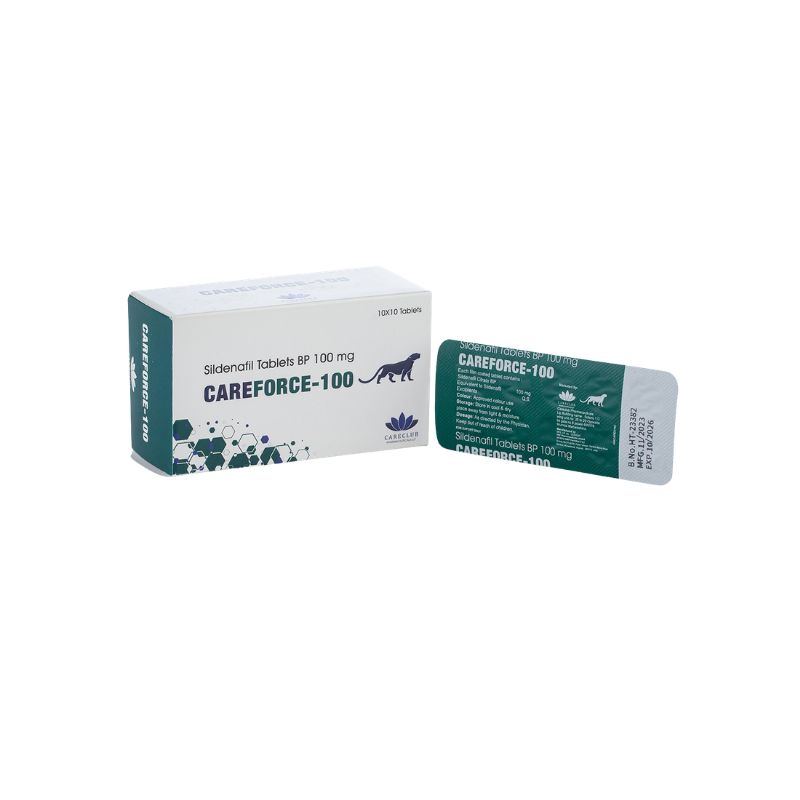
The compounds as supplied by the manufacturer: the 150 mg presentation · the 100 mg presentation
What we supply
The sildenafil preparations above, as supplied by the manufacturer, tracked, from inside the EU.
Research use only. This page summarises published studies for research reference. It is not medical advice, not a protocol, and not a suggestion for human use. Nothing we supply is for human or veterinary use.