Sildenafil in diabetes: the erectile endpoint that moved, and the glycaemic one that did not
Two randomised trials, two different questions. In 219 men with type 2 diabetes, sildenafil moved the erection questions of the IIEF from 1.86 and 1.84 to 3.42 and 3.35 out of 5, and held that gain whether HbA1c was above or below 8.3%. In 42 people with prediabetes, sildenafil 25 mg three times daily for 3 months improved the clamp insulin-sensitivity index by 1.84 — with a 95% CI from 0.01 to 3.67 and p = 0.049.
29 October 2026 · 4 min read
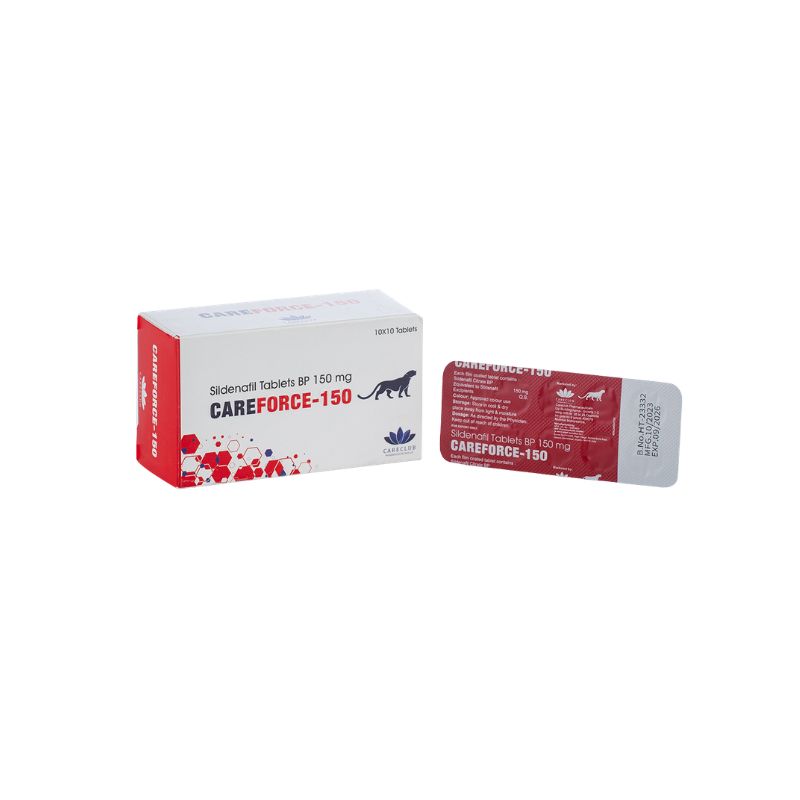
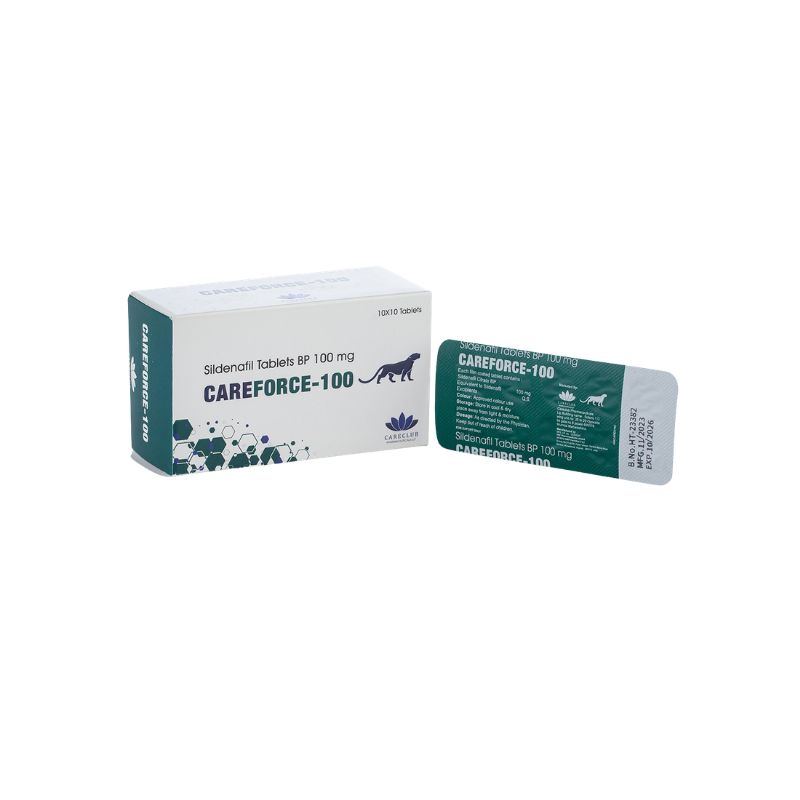 Careforce-100 (Sildenafil 100 mg)
Ninety percent of men with diabetes have type 2, and erectile dysfunction is common in that group — the 2001 Diabetologia paper opens with exactly that framing. This page covers two randomised sildenafil trials in diabetes and prediabetes, because they measure different things and only one of them moved its primary endpoint decisively.
The 219-man trial: the endpoint that moved
Patients with a mean age of 59 years were randomised in a double-blind, placebo-controlled trial to sildenafil at 25-100 mg (n = 110) or matching placebo (n = 109) for 12 weeks. The primary efficacy criteria were questions 3 — achieving an erection — and 4 — maintaining an erection — from the International Index of Erectile Function, each scored 0-5. Secondary measures included a global efficacy question, patient event logs, a life satisfaction checklist and the remaining IIEF questions.
After 12 weeks, the mean scores for questions 3 and 4 had improved significantly on sildenafil: 3.42 ± 0.23 and 3.35 ± 0.24, against 1.86 ± 0.22 and 1.84 ± 0.23 on placebo, p < 0.0001. The global efficacy question was positive in 64.6% on sildenafil against 10.5% on placebo.
The subgroup analysis is the part usually left out, and here it cuts in the compound’s favour. Even when correlating efficacy with glycated haemoglobin — at or below 8.3%, or above 8.3%, which was the median concentration in this study — or with the number of diabetic complications, zero or one or more, the mean scores for the global efficacy question and for IIEF questions 3 and 4 remained higher for every sildenafil subgroup than for the placebo subgroups, p < 0.0001.
So the effect held across glycaemic control. It is still a 0-5 scale moving by about 1.5 points, and the global efficacy figure is the one to read.
The 42-person clamp trial: the endpoint that barely cleared
The 2015 Journal of Clinical Endocrinology and Metabolism paper tested a different hypothesis: that chronic PDE5 inhibition with sildenafil improves insulin sensitivity and secretion without diminishing fibrinolytic function. Overweight individuals with prediabetes were randomised to sildenafil 25 mg three times a day or matching placebo for 3 months, with a hyperglycaemic clamp before and at the end of treatment. Twenty-one subjects completed each arm.
The primary outcome barely met significance. After 3 months, the insulin sensitivity index was greater in the sildenafil group by 1.84 mg/kg/min per μU/mL*100 (95% confidence interval 0.01 to 3.67; P = .049), after adjusting for baseline insulin sensitivity index and body mass index. The confidence interval’s lower bound is 0.01.
There was no effect of 3-month sildenafil treatment on acute- or late-phase glucose-stimulated insulin secretion, P > .30. Sildenafil decreased plasminogen activator inhibitor-1 (P = .01) without altering tissue-plasminogen activator, and in contrast to placebo decreased the urine albumin-to-creatinine ratio from 12.67 ± 14.67 to 6.84 ± 4.86 μg/mg creatinine.
A p of 0.049 with a lower confidence bound of 0.01 in 42 people is a hypothesis-generating result. It is not a metabolic indication, and this page does not present it as one.
Where the same molecule is actually established
The 2005 New England Journal of Medicine SUPER trial randomised 278 patients with symptomatic pulmonary arterial hypertension to sildenafil 20, 40 or 80 mg orally three times daily for 12 weeks, and reported a placebo-corrected improvement in six-minute walk distance of 45, 46 and 50 metres at the three doses, with reductions in mean pulmonary-artery pressure and improvements in WHO functional class. That is the indication with a large, clean, replicated dataset behind it — and it is a different disease in a different population.
What the data do not show
They do not show a diabetes indication for sildenafil. The clamp trial has 42 completers and a confidence interval of 0.01 to 3.67.
They do not show improved glycaemic control. Neither trial reports an HbA1c change as an outcome, and the clamp trial found no effect on glucose-stimulated insulin secretion.
They do not show a diabetes-specific advantage for the erection endpoint. The subgroup analysis in the 219-man trial found the effect held across glycaemic strata; it did not find that the effect was larger in men with diabetes than in men without.
They do not show a renal or cardiovascular outcome. The albumin-to-creatinine ratio change in the 42-person trial is a secondary finding in a prediabetes population, not a renal indication.
One catalogue note, stated as a limit rather than as guidance: the 219-man trial used 25-100 mg as a range and the clamp trial used 25 mg three times daily. The 20 mg figure is the one with a printed glucose-related number, and no abstract cited here tests a single 100 mg film-coated tablet on a clamp or an IIEF.
Where this sits on the shelf
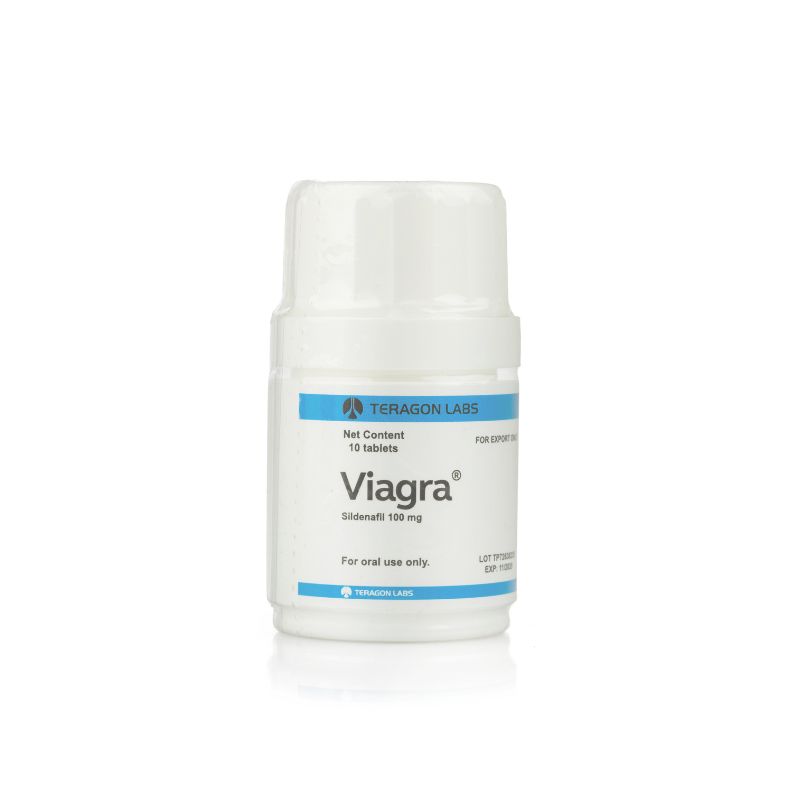
The compounds as supplied by the manufacturer: the sildenafil 100 mg presentation · the Viagra-branded 100 mg presentation
What we supply
The sildenafil presentations above, as supplied by the manufacturer, tracked, from inside the EU.
Research use only. This page summarises published studies for research reference. It is not medical advice, not a protocol, and not a suggestion for human use. Nothing we supply is for human or veterinary use.
References.
- Boulton AJ, Selam JL, Sweeney M, Ziegler D. Sildenafil citrate for the treatment of erectile dysfunction in men with Type II diabetes mellitus. Diabetologia 2001 Oct;44(10):1296-301.
- Ramirez CE, Nian H, Yu C, et al. Treatment with Sildenafil Improves Insulin Sensitivity in Prediabetes: A Randomized, Controlled Trial. J Clin Endocrinol Metab 2015 Dec;100(12):4533-40.
- Galie N, Ghofrani HA, Torbicki A, et al. Sildenafil citrate therapy for pulmonary arterial hypertension. N Engl J Med 2005 Nov 17;353(20):2148-57.