Tirzepatide versus semaglutide: the head-to-head, and what an observational study adds
SURMOUNT-5 randomised 751 adults with obesity and without type 2 diabetes to maximum tolerated dose tirzepatide or semaglutide for 72 weeks. Least-squares mean weight change was -20.2% (95% CI -21.4 to -19.1) with tirzepatide and -13.7% (95% CI -14.9 to -12.6) with semaglutide, P<0.001; waist circumference -18.4 cm against -13.0 cm. Open-label, sponsored by Eli Lilly, with two published correspondence items.
30 October 2026 · 4 min read
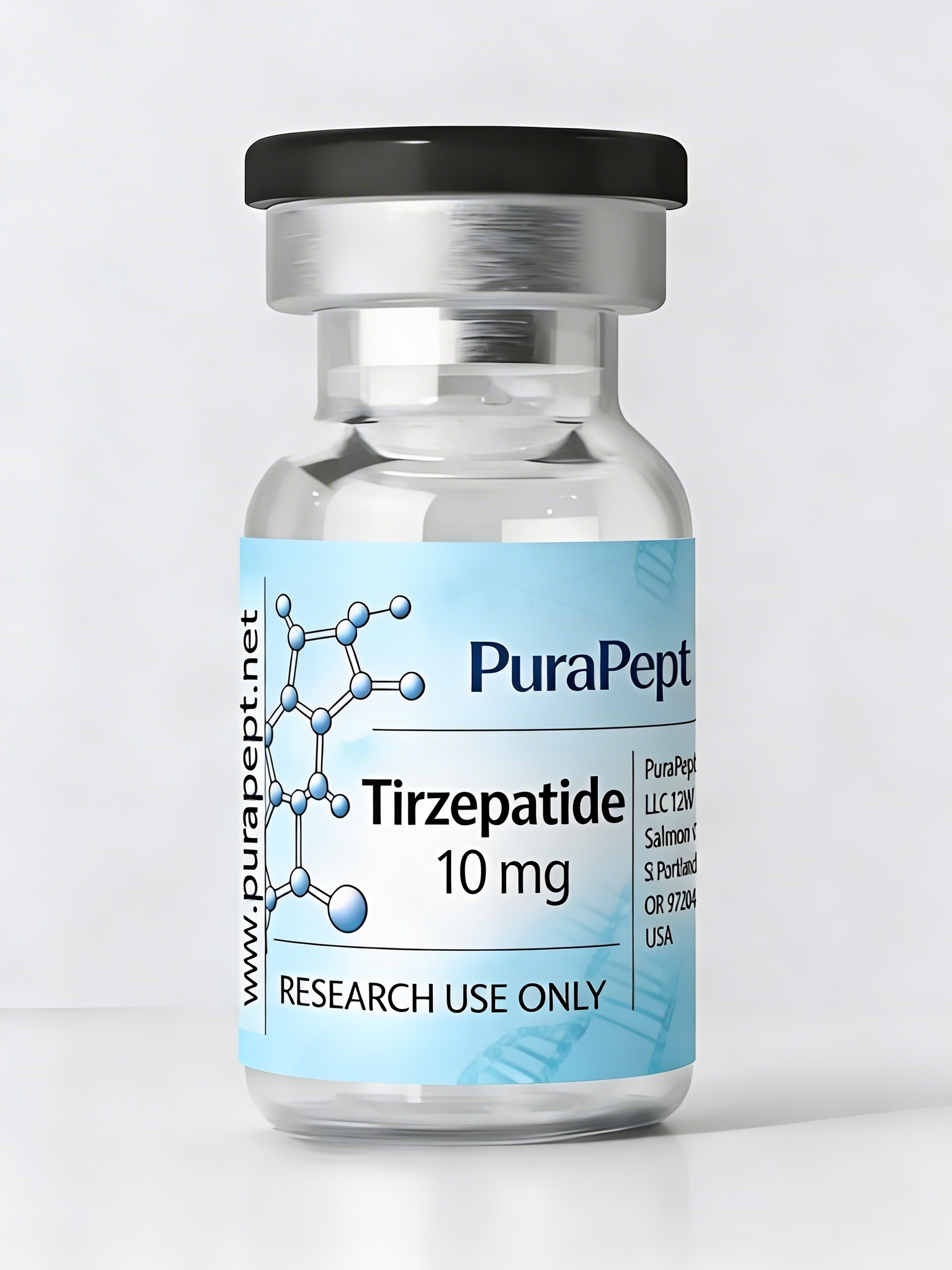 Tirzepatide 10 mg
For most of the history of these two drugs there was no head-to-head. A 2024 JAMA Internal Medicine paper states the problem plainly in its opening: although both were shown to reduce weight in randomized trials, “data from head-to-head comparisons in populations with overweight or obesity are not yet available.” That paper and the trial that answered it are the two references that carry this page.
SURMOUNT-5: the randomised answer
The 2025 New England Journal of Medicine paper reports a phase 3b, open-label, controlled trial. Adult participants with obesity but without type 2 diabetes were randomised 1:1 to the maximum tolerated dose of tirzepatide (10 mg or 15 mg) or the maximum tolerated dose of semaglutide (1.7 mg or 2.4 mg), subcutaneously once weekly, for 72 weeks. 751 participants underwent randomisation. The primary endpoint was percent change in weight from baseline to week 72; key secondary endpoints included reductions of at least 10%, 15%, 20% and 25% and a change in waist circumference.
The numbers:
- Least-squares mean percent change in weight at week 72 was −20.2% (95% CI −21.4 to −19.1) with tirzepatide and −13.7% (95% CI −14.9 to −12.6) with semaglutide, P < 0.001.
- Least-squares mean change in waist circumference was −18.4 cm (95% CI −19.6 to −17.2) against −13.0 cm (95% CI −14.3 to −11.7), P < 0.001.
- Tirzepatide participants were more likely to reach each of the 10%, 15%, 20% and 25% thresholds. No percentages for those four thresholds are printed in the abstract.
- The most common adverse events in both arms were gastrointestinal, mostly mild to moderate, and occurring primarily during dose escalation.
Three things to hold onto. It was open-label. It was in people without type 2 diabetes. And it tested maximum tolerated dose — the 1.7 mg semaglutide arm is the 1.0 mg vial escalated, not a 2.4 mg-only comparison. The same record carries three published correspondence items in NEJM (2025 Oct 23;393(16):1654-1655, 1655 and 1655-1656), and the trial was funded by Eli Lilly.
The observational study that came first
The 2024 JAMA Internal Medicine paper is not a trial. It is a retrospective cohort using electronic health record data linked to dispensing information from a collective of US health care systems. Adults who received tirzepatide or semaglutide in formulations labelled for type 2 diabetes, on or off label, between May 2022 and September 2023, were identified. 41,222 adults met the criteria (semaglutide 32,029; tirzepatide 9,193) and 18,386 remained after propensity score matching. Mean age 52.0 years; 70.5% female; 52.0% had type 2 diabetes; mean baseline weight 110 kg.
Tirzepatide was associated with greater weight loss: hazard ratios of 1.76 (95% CI 1.68 to 1.84) for ≥5%, 2.54 (95% CI 2.37 to 2.73) for ≥10%, and 3.24 (95% CI 2.91 to 3.61) for ≥15% loss. Mean on-treatment weight differences were −2.4% at 3 months (95% CI −2.5 to −2.2), −4.3% at 6 months (−4.7 to −4.0) and −6.9% at 12 months (−7.9 to −5.8). Rates of gastrointestinal adverse events were similar.
Read the two studies together and the direction agrees. But note what the cohort is: on- or off-label use of the diabetes-labelled formulations, in a population where just over half had type 2 diabetes, without randomisation. Follow-up was ended by discontinuation for 55.9% of the tirzepatide group and 52.5% of the semaglutide group, which is the number that limits a per-protocol weight comparison more than the sample size does.
What the quality-of-life analysis added
A prespecified secondary analysis of SURMOUNT-5 examined SF-36v2 norm-based scores at week 72. Physical Component Summary scores improved from baseline with both treatments (p < 0.001), while Mental Component Summary scores did not improve significantly in either arm (p > 0.05). All domain scores improved (p ≤ 0.008), with a larger General Health improvement for tirzepatide than semaglutide (5.45 versus 4.20; p = 0.003). Participants with limited baseline physical function improved in PCS, Physical Functioning and General Health with tirzepatide versus semaglutide (p ≤ 0.025).
That analysis was post hoc for the baseline-physical-function subgroup, and five of its six named authors are Eli Lilly employees and shareholders; the sponsor designed and oversaw the trial. The authors state that themselves.
What the data do not show
They do not show a cardiovascular, renal or mortality outcome for either drug. The primary endpoint was weight.
They do not show a result in people with type 2 diabetes. SURMOUNT-5 excluded them.
They do not show a comparison at a fixed single dose. Both arms titrated to maximum tolerated dose.
They do not show a mental health or quality-of-life advantage. The MCS did not improve in either arm.
They do not show a head-to-head cardiovascular outcome. The observational paper states that “future study is needed to understand differences in other important outcomes.”
One catalogue note, stated as a limit rather than as guidance: the presentation on this site is 10 mg. The trial’s semaglutide arm used 1.7 mg or 2.4 mg and its tirzepatide arm 10 mg or 15 mg. The 10 mg figure is inside the tirzepatide arm range and outside the semaglutide one, and this page cannot translate a titration protocol into a vial.
Where this sits on the shelf
The compounds as supplied by the manufacturer: Tirzepatide · Semaglutide
What we supply
The two presentations above, as supplied by the manufacturer, tracked, from inside the EU.
Research use only. This page summarises published studies for research reference. It is not medical advice, not a protocol, and not a suggestion for human use. Nothing we supply is for human or veterinary use.
References.
- Aronne LJ, Horn DB, le Roux CW, et al. Tirzepatide as Compared with Semaglutide for the Treatment of Obesity. N Engl J Med. 2025 Jul 3;393(1):26-36.
- Rodriguez PJ, Goodwin Cartwright BM, Gratzl S, et al. Semaglutide vs Tirzepatide for Weight Loss in Adults With Overweight or Obesity. JAMA Intern Med. 2024 Sep 1;184(9):1056-1064.
- Shukla AP, Dunn JP, Gomez Valderas E, et al. Improved health-related quality of life with tirzepatide versus semaglutide in adults with obesity or overweight from the SURMOUNT-5 trial. Diabetes Obes Metab. 2026 Jan;28(1):452-462.