Tadalafil for lower urinary tract symptoms: the meta-analysis numbers, not the impression
Tadalafil 5 mg once daily is approved for BPH-related lower urinary tract symptoms in a way that surprises people. A 2021 evidence-based analysis of 15 randomised trials gives the pooled effects: total IPSS mean difference -1.97 points against placebo, voiding subscore -1.30, storage subscore -0.70, quality of life -0.29. Those are small numbers on a 0-35 scale, and they are real.
28 October 2026 · 3 min read
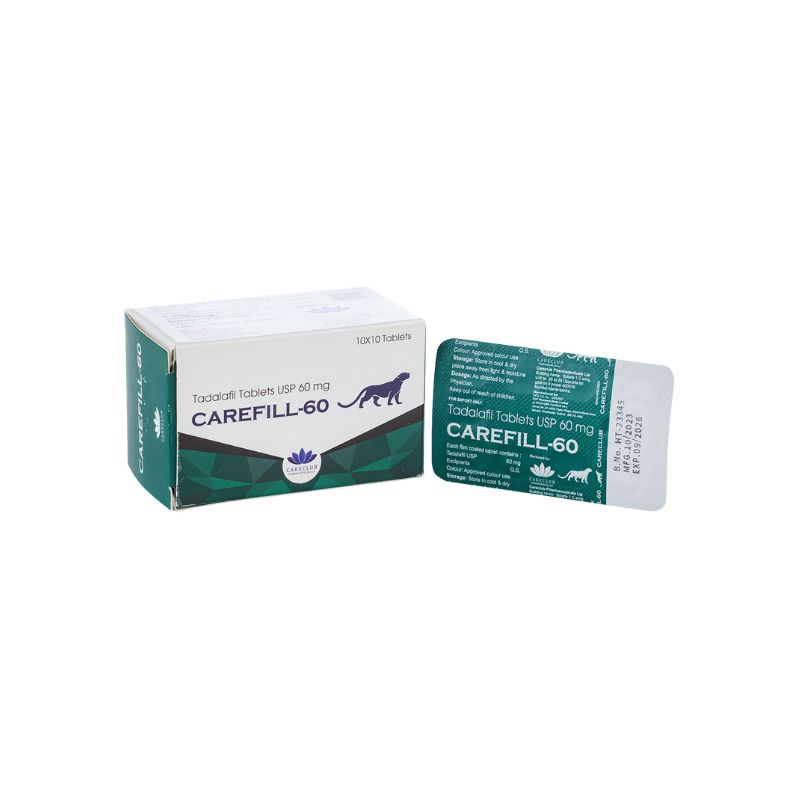 Carefill-60 (Tadalafil 60 mg)
The rationale for treating a urinary symptom with an erectile-dysfunction drug rests on three observations, printed in a 2006 review: the prevalence of lower urinary tract symptoms, benign prostatic hyperplasia and erectile dysfunction all increase with age; phosphodiesterase-5 inhibition mediates smooth-muscle relaxation in the lower urinary tract; and early clinical evidence shows PDE5 inhibitors treat both. A shared pathophysiology makes PDE5 a target for both conditions, and the ability to treat both with one medication is “noteworthy given the significant negative impact in quality-of-life measures these disorders have in ageing men.”
This page reports the effect sizes, because the impression and the numbers are very different.
The pooled numbers, from 15 randomised trials
A 2021 evidence-based analysis in Frontiers in Medicine extracted 13 studies covering 15 randomised clinical trials from PubMed, the Cochrane Central Register of Controlled Trials, Embase and Web of Science up to July 2021, with quality assessed independently by two authors.
On total International Prostate Symptom Score over 12 weeks, tadalafil 5 mg once daily gave a mean difference against placebo of -1.97 points (95% CI -2.24 to -1.70; P < 0.00001). The subscores: voiding -1.30 (95% CI -1.48 to -1.11), storage -0.70 (95% CI -0.82 to -0.58), quality of life -0.29.
The IPSS runs from 0 to 35, so a 1.97-point difference on the total is a little over 5% of the scale’s full range. That is a real, statistically unambiguous effect — the confidence interval excludes zero by a wide margin and P is below 0.00001 — and it is a small one. The quality-of-life subscore difference of -0.29 is the smallest of the four, and that is the endpoint the 2006 review singles out as the reason treating both conditions with one drug is worth doing.
Read all four numbers together, not the significance alone. Significant and small are not contradictory.
How large the underlying evidence is
A 2015 narrative review in Therapeutic Advances in Urology summarises the trial base: 11 larger, 12-week, double-blind, randomised, placebo-controlled studies of tadalafil, including four Asian studies, conducted globally, enrolling more than 3,000 men with BPH-LUTS. In addition, two long-term studies of 42 and 52 weeks enrolled 394 Japanese and 428 North American men.
That review reports the same direction of effect: significant improvements from baseline to endpoint in total IPSS, the storage and voiding subscores, and the IPSS quality-of-life index compared with placebo, with tadalafil well tolerated and a favourable safety profile.
On mechanism, the same review reports that PDE5 is highly expressed in the lower urinary tract and its supporting vasculature, and that PDE5 inhibition potentially decreases smooth-muscle cell proliferation in the prostate, relaxes smooth muscle in the prostate, bladder neck and supporting vasculature, increases blood perfusion to the lower urinary tract, and modulates bladder afferent nerve activity.
Disclosure worth printing: the 2015 review’s authors include an employee of Eli Lilly Japan, an employee of Eli Lilly and Company, advisory board members for Eli Lilly Japan, and stockholders in Eli Lilly. The manufacturer of tadalafil authored the review of its own product’s benefit. That does not make the numbers wrong — the 2021 meta-analysis is independent of the company — but the 2015 paper should be read as a sponsor-authored review.
What the data do not show
They do not show a large symptom improvement. The pooled total-IPSS difference is -1.97 points on a 0-35 scale, and the quality-of-life difference is -0.29.
They do not show a 12-week result for anything longer. The 2021 analysis is 12-week monotherapy; the 42- and 52-week studies exist but are reported in the sponsor-authored review, and neither their effect sizes nor their comparator numbers are printed in the abstract cited here.
They do not show that tadalafil treats the prostate. Every endpoint on this page is a symptom score. No prostate volume, PSA or progression endpoint is reported in the abstracts cited.
One catalogue note, stated as a limit rather than as guidance: the pooled figures above are all 5 mg once daily for 12 weeks. The presentations on this site are the 40 mg, 60 mg and 80 mg forms, and no abstract cited on this page reports a 12-week IPSS result for any of them. A 40 mg or 80 mg film-coated tablet is not a 5 mg once-daily tablet, and nothing here says what one does to an IPSS.
Where this sits on the shelf
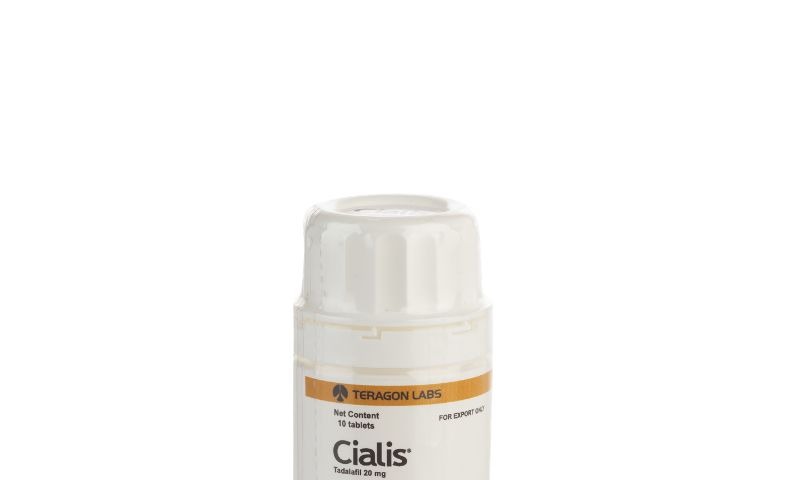
The compounds as supplied by the manufacturer: the tadalafil 60 mg presentation · the tadalafil 20 mg presentation
What we supply
The tadalafil presentations above, as supplied by the manufacturer, tracked, from inside the EU.
Research use only. This page summarises published studies for research reference. It is not medical advice, not a protocol, and not a suggestion for human use. Nothing we supply is for human or veterinary use.
References.
- Cui J, Cao D, Bai Y, et al. Efficacy and Safety of 12-week Monotherapy With Once Daily 5 mg Tadalafil for Lower Urinary Tract Symptoms of Benign Prostatic Hyperplasia: Evidence-based Analysis. Front Med (Lausanne). 2021 Oct 12;8:744012.
- Yokoyama O, Igawa Y, Takeda M, Yamaguchi T, Murakami M, Viktrup L. Tadalafil for lower urinary tract symptoms secondary to benign prostatic hyperplasia: a review of clinical data in Asian men and an update on the mechanism of action. Ther Adv Urol. 2015 Oct;7(5):249-64.
- Gonzalez RR, Kaplan SA. Tadalafil for the treatment of lower urinary tract symptoms in men with benign prostatic hyperplasia. Expert Opin Drug Metab Toxicol. 2006 Aug;2(4):609-17.