
Clomiphene and the semen-analysis trials: what the randomised record shows
The pooled randomised evidence for clomiphene in men with idiopathic oligozoospermia is weak by design, not by accident. The Cochrane review of ten trials and 738 men found no difference in pregnancy rate when only trials with secure randomisation were used (OR 1.26). The 2007 update of that same review is titled WITHDRAWN. The best-looking single trial tested clomiphene plus vitamin E, not clomiphene.
23 October 2026 · 5 min read
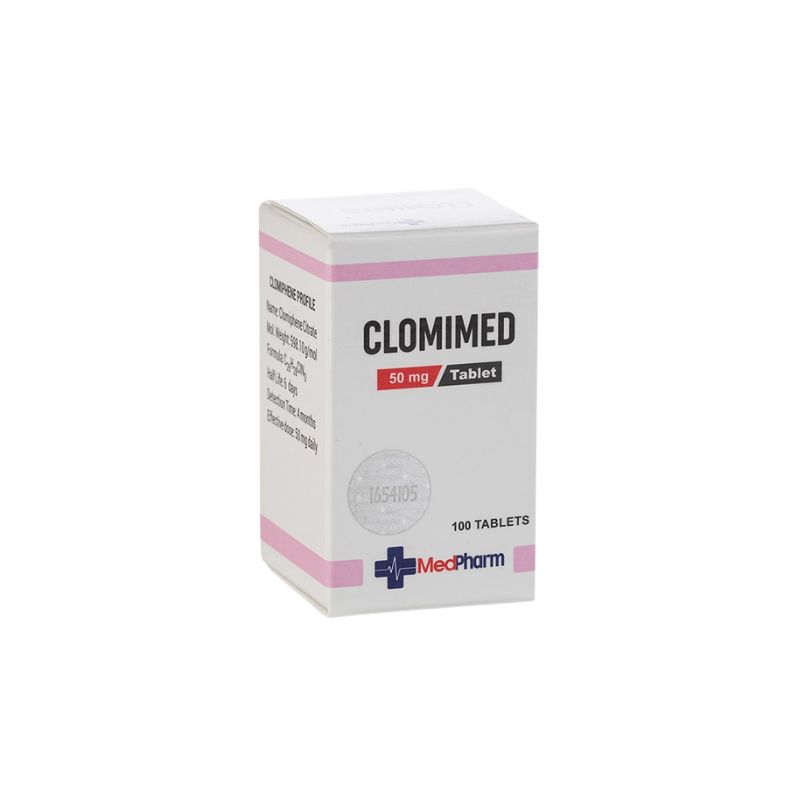 Clomimed (Clomiphene 50 mg)
Clomiphene citrate is a selective oestrogen receptor modulator. The rationale is endocrine, and the review that states it states it precisely: anti-oestrogens interfere with the normal negative feedback of sex steroids at hypothalamic and pituitary level, which is claimed to increase endogenous gonadotropin-releasing hormone secretion from the hypothalamus and FSH and LH secretion from the pituitary. FSH and LH stimulate Leydig cells in the testes, which “has been claimed to lead to increased local testosterone production, thereby boosting spermatogenesis with a possible improvement in fertility.”
Note the chain of hedges in the mechanism sentence. It is the mechanism as the review group wrote it, and it is reproduced here unchanged.
The pooled evidence, and why the design undermines it
The Cochrane review is the anchor, and its main results section is unusually blunt about quality. Ten studies involving 738 men were included. Five of the trials did not specify a method of randomisation.
In trials with secure randomisation there was no difference in pregnancy rate between the anti-oestrogen and control groups: odds ratio 1.26, 95% confidence interval 0.99 to 1.56. The overall pregnancy rate for those five trials was 15.4% against a spontaneous rate of 12.5% in the control groups. When all ten trials were included the odds rose to 1.56 (95% CI 0.99 to 2.19), and the review states this result “is likely to be artificially inflated.”
On endocrine outcomes the review found the opposite: anti-oestrogens “had a positive effect on endocrinal outcomes, such as serum testosterone levels.” The reviewer’s conclusion is that anti-oestrogens appear to have a beneficial effect on endocrinal outcomes, but there is not enough evidence to evaluate their use for increasing male fertility.
A reader checking PubMed for the current version of that review will find that the 2007 update of the same record is titled WITHDRAWN. Both records are cited here, because the withdrawn status is itself the most useful thing on the page for anyone assessing the evidence.
The single best-looking trial, and what it actually tested
The 2010 Fertility and Sterility trial is the strongest pregnancy-rate number in this literature, and it is a combination trial. Sixty infertile men with idiopathic oligoasthenozoospermia were randomised to clomiphene citrate 25 mg per day plus vitamin E 400 mg per day (n = 30) against placebo (n = 30), for six months.
The pregnancy rate was 36.7% (11/30) in the combination group against 13.3% (4/30) in the control group, odds ratio 3.76, 95% confidence interval 1.03 to 13.64. The trial also showed a significantly higher increase in sperm count and progressive sperm motility, with nonsignificant changes in total sperm motility, the percentage of abnormal forms and semen volume.
Two limits are printed, not inferred. The trial tests clomiphene plus vitamin E, so the 36.7% cannot be attributed to clomiphene alone. And the confidence interval runs from 1.03 to 13.64 — it barely excludes one, which is what an n = 60 trial looks like.
A pilot trial where clomiphene was in both arms
The 2019 Urology Journal pilot randomised 40 men with idiopathic infertility to spirulina plus the treating physician’s conventional regimen, against placebo plus the same conventional regimen, over 12 weeks. The conventional regimen is named in the abstract: 220 mg per day zinc sulphate, 500 mg per day L-carnitine and 50 mg per day clomiphene.
Because clomiphene was in both arms, this trial does not test clomiphene. What it reports is semen parameter values of count 16.43 against 46.00 (P = .164), motility 51.00 against 48.7 (P = .008) and morphology 47.50 against 15.00 (P = NA), with a pregnancy rate of 5% in the spirulina group against 0% in the control group. The abstract states that no significant differences in semen parameters were observed between the groups, while printing P = .008 for the motility comparison. Both are reproduced here as printed; the abstract does not resolve the discrepancy and neither does this page.
How a 2017 review ranks the options
A 2017 review of empiric hormonal therapy for idiopathic male infertility puts clomiphene in context. It reports that infertility affects approximately 15% of all couples, that male factor contributes to up to 50% of cases, and that the cause of male infertility is unknown in about 30% of them.
On the classes, the review states that gonadotropins, androgens, aromatase inhibitors and selective oestrogen receptor modulators have all been used with varying results, and that “the studies on these treatments are of variable quality.” The most well-studied agents are the SERMs, which “show a modest increase in semen parameters and pregnancy rates.” Aromatase inhibitors are most effective in non-idiopathic patients. Gonadotropin treatment is limited by inconvenience and relative ineffectiveness in this population. And the review states plainly that testosterone suppresses spermatogenesis and should not be used to treat infertility, and that large multicentre randomised controlled studies are needed.
What the data do not show
They do not show that clomiphene raises the pregnancy rate. The pooled estimate in the trials with secure randomisation is an odds ratio of 1.26 with a confidence interval that crosses one.
They do not isolate clomiphene in the trial that reports the biggest pregnancy difference, because that trial gave vitamin E alongside it.
They do not separate a semen-parameter improvement from a fertility outcome. The review’s own framing is that endocrine outcomes move and the fertility question is unanswered.
They do not include a trial large enough to settle the question, which is what the 2017 review concludes is needed.
One catalogue note, stated as a limit rather than as guidance: the preparation on this site is 50 mg. The 25 mg per day in the 2010 combination trial and the 50 mg per day in the 2019 conventional regimen are the only figures printed in the abstracts cited here, and neither isolates a dose-response.
Where this sits on the shelf
The compound as supplied by the manufacturer: Clomimed
What we supply
The clomiphene preparation above, as supplied by the manufacturer, tracked, from inside the EU.
Research use only. This page summarises published studies for research reference. It is not medical advice, not a protocol, and not a suggestion for human use. Nothing we supply is for human or veterinary use.
References.
- Vandekerckhove P, Lilford R, Vail A, Hughes E. Clomiphene or tamoxifen for idiopathic oligo/asthenospermia. Cochrane Database Syst Rev 2000;1996(2):CD000151.
- Vandekerckhove P, Lilford R, Vail A, Hughes E. WITHDRAWN: Clomiphene or tamoxifen for idiopathic oligo/asthenospermia. Cochrane Database Syst Rev 2007 Jul 18;(4):CD000151.
- Ghanem H, Shaeer O, El-Segini A. Combination clomiphene citrate and antioxidant therapy for idiopathic male infertility: a randomized controlled trial. Fertil Steril 2010;93(7):2232-5.
- Tadros NN, Sabanegh ES. Empiric medical therapy with hormonal agents for idiopathic male infertility. Indian J Urol 2017;33(3):194-198.
- Modarresi R, Aminsharifi A, Foroughinia F. Impact of Spirulina Supplementation on Semen Parameters in Patients with Idiopathic Male Infertility: A Pilot Randomized Trial. Urol J 2019;16(1):78-82.


