
Clomiphene: approved for ovulation, studied in men
The label is narrow: ovulatory dysfunction in women desiring pregnancy, with visual and ovarian warnings attached. The male literature is real but off-label: one placebo-controlled trial in 78 men and two phase III enclomiphene studies, measuring hormones and sperm, not outcomes the label ever claimed.
30 September 2026 · 3 min read
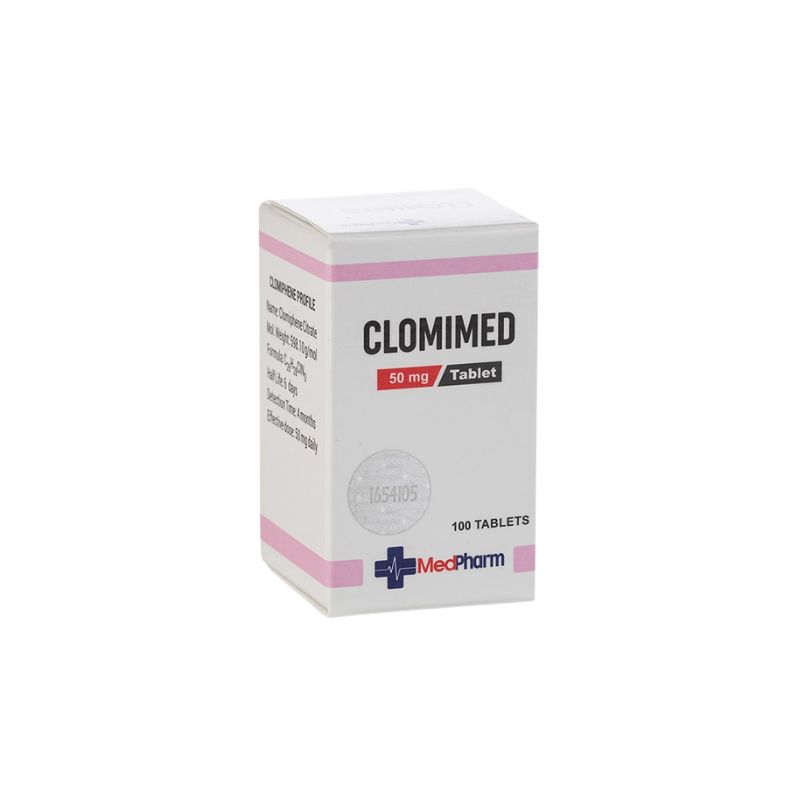 Clomimed (Clomiphene 50 mg)
Clomiphene sits in two different stories at once. On the label it is a fertility drug for women, with a narrow indication and warnings earned over decades of use. In the literature it is also one of the most studied off-label options for low testosterone in men, with randomised data behind it. Both stories are worth a straight reading, because neither transfers to the other.
What the label actually says
The current US labelling indicates clomiphene citrate for the treatment of ovulatory dysfunction in women desiring pregnancy, and names the patients most likely to respond: polycystic ovary syndrome, amenorrhea-galactorrhea syndrome, psychogenic amenorrhea, post-oral-contraceptive amenorrhea, and certain secondary amenorrheas. It is contraindicated in pregnancy and in hypersensitivity, and long-term cyclic therapy is not recommended beyond about six cycles.
The warnings section is the part prescribers remember. Visual symptoms, blurring, spots or flashes, may occur during therapy and usually reverse, but prolonged cases have been reported, some after discontinuation, and the disturbances may be irreversible with increased amounts or longer courses. The label ties this to a practical caution about driving and machinery under variable lighting. There is a dedicated ovarian hyperstimulation warning, and the original trials reported multiple pregnancies in 7.98 percent of the 2,369 pregnancies with known outcome. None of this is about men. The male use that fills forums appears nowhere in the labelling.
What the male trials measured
The cleanest clomiphene trial in men that PubMed returns is Soares 2018: a single-centre, randomised, double-blind, placebo-controlled study in 78 men with obesity-associated secondary hypogonadism. Entry meant a body mass index above 30, morning total testosterone at or below 300 ng/dL, and symptoms on the ADAM questionnaire. One arm received a single daily clomiphene tablet for 12 weeks; the other received placebo.
Total and free testosterone, estradiol, LH, FSH and SHBG all rose in the clomiphene arm at P under 0.001. Of the recorded complaints only one moved, weaker erections, also at P under 0.001. Body composition shifted the same direction: lean mass, fat-free mass and muscle mass improved, while HDL fell at P under 0.001 and endothelial function did not change. The authors called clomiphene a possible alternative for this population. Note the shape of that result: hormones and composition moved, vascular function did not, and symptom relief was thin.
The sperm question was answered by a different molecule in the same family. Kim 2016 reports two parallel phase III studies, ZA-304 and ZA-305, testing two enclomiphene strengths against testosterone gel in overweight men aged 18 to 60 with secondary hypogonadism, over 16 weeks. Testosterone rose in every arm. LH and FSH rose on enclomiphene and fell on gel, which is the mechanism made visible: one approach restores the signal, the other replaces its product. Sperm concentrations stayed in the normal range on enclomiphene while spermatogenesis fell markedly on gel. That contrast is the whole argument for the SERM path in men who care about fertility, and it comes from randomised, double-blind, double-dummy, multicentre data.
One catalogue note for researchers: the preparation on this page is Clomimed. Read the trial figures above as data on the compound, not as characteristics of any preparation. The male trials are off-label research; the approved indication is the one in the first section. For the other end of the same hormonal axis, the kisspeptin piece covers the signal that starts the cascade: Kisspeptin and the HPG axis.
What the data do not show
A male indication, a fertility protocol, or symptom relief broader than one questionnaire item in one 78-man trial. What exists is narrower and still useful: an approved ovulation indication with quantified warnings, proof that clomiphene raises gonadotropins and testosterone in hypogonadal men over 12 weeks, and phase III evidence that the SERM path preserves sperm where gel suppresses it. Everything about long-term safety in men, cardiovascular outcomes, and sustained symptom relief is extrapolation.
Research use only. This page summarises the approved labelling and published randomised trials for research reference. It is not medical advice and not a suggestion for human use. Nothing we supply is for human or veterinary use.
References.
- DailyMed: clomiphene citrate current US labelling (indication, contraindications, visual and ovarian warnings)
- Soares AH, et al. Effects of clomiphene citrate on male obesity-associated hypogonadism: a randomized, double-blind, placebo-controlled study. Int J Obes (Lond) 2018. PubMed record (PMID 29777228).
- Kim ED, et al. Oral enclomiphene citrate raises testosterone and preserves sperm counts in obese hypogonadal men, unlike topical testosterone: restoration instead of replacement. BJU Int 2016. PubMed record (PMID 26496621).
- Joseph T, et al. Are SERMs safe and effective for the treatment of hypogonadism in men? J Fam Pract 2022. PubMed record (PMID 35259334).


