Drostanolone and the breast-cancer file: the half nobody mentions
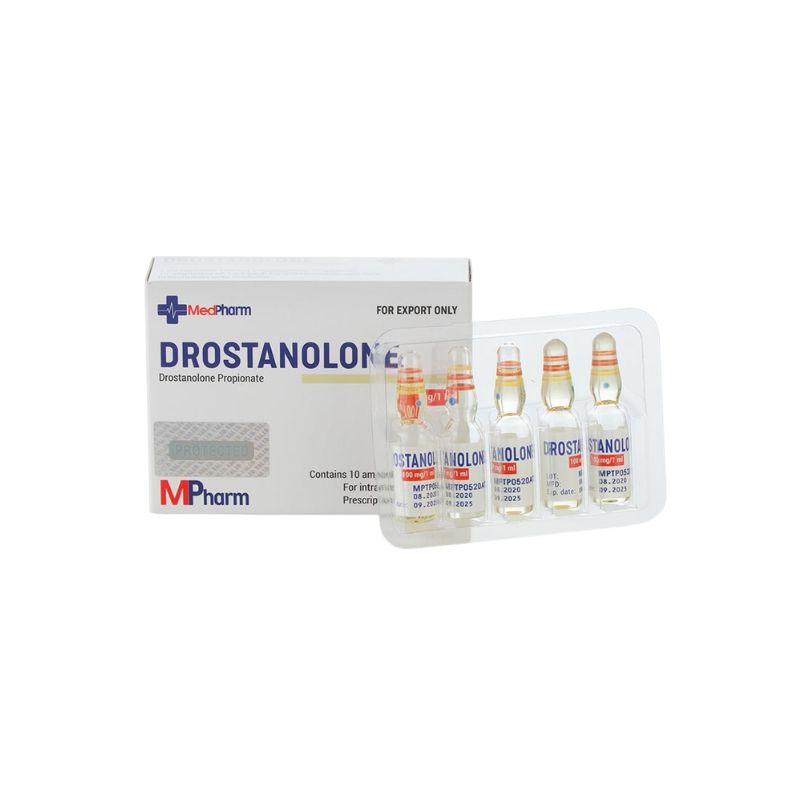
Drostanolone is a 2α-methyl-dihydrotestosterone. On the doping side it is a detection problem; on the oncology side it was an antiandrogen given to women with advanced breast cancer, with three published clinical comparisons. Both halves of that file are indexed, and only one of them is ever repeated.
12 November 2026 · 4 min read
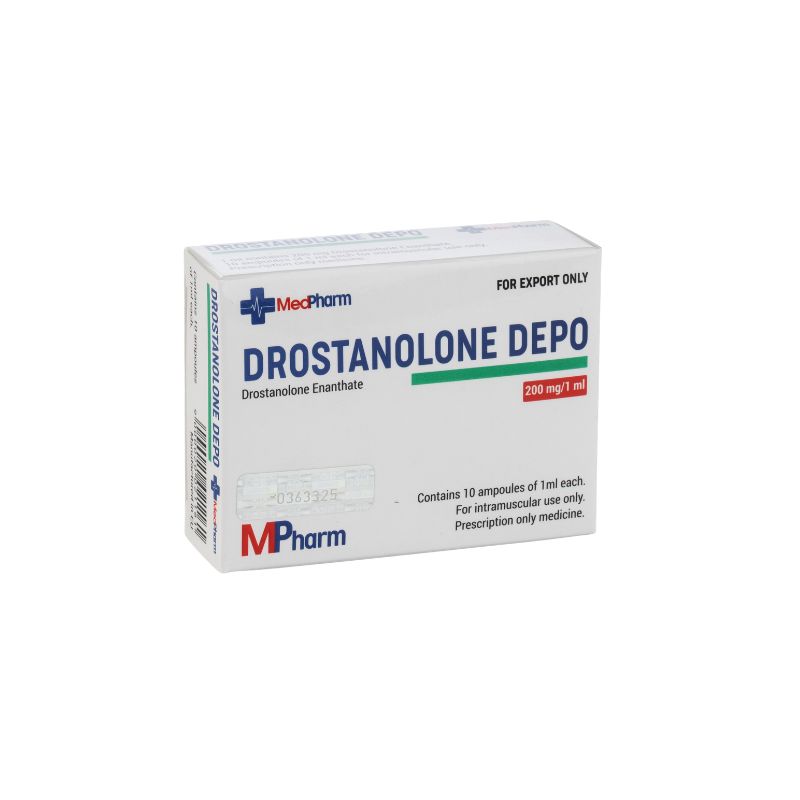 Drostanolone Depo (Drostanolone Enanthate 200 mg/ml)
Drostanolone Propionate is 2α-methyl-5α-dihydrotestosterone, a derivative of DHT. The file on it is unusual: the substance was used clinically for decades, in a completely different context from the one it is now sold for, and the indexed record contains three human comparisons in advanced breast carcinoma alongside the analytical work. This page walks both halves.
The oncology half
Drostanolone entered clinical use as an antiandrogen, at a time when the treatment of advanced breast carcinoma had few options and the antiandrogenic arm of that treatment was being explored. Three records carry that history.
The most substantial is a head-to-head comparison against another anabolic steroid, nandrolone decanoate, in the treatment of breast carcinoma, published in Clinical Oncology in 1976 under the trade names of both compounds. It is a comparison trial, which makes it more informative than a single-arm series, and it is old enough that nobody cites it in a bodybuilding forum.
A 1969 issue of the Drug and Therapeutics Bulletin recorded a comparison of drostanolone and norethisterone in disseminated breast cancer. The record is a short bulletin item from the era when such notes were how a new drug entered a formulary discussion, and it is indexed precisely because it was indexed then — an example of how much of this drug’s clinical history is retrievable only through very old records.
A third record is a single case report, published in the Bristol Medico-Chirurgical Journal in 1970, of a patient with advanced breast carcinoma treated with drostanolone propionate.
The honest characterisation of this file is narrow but real: the drug was administered to people, in a defined indication, before it was a research chemical. That is a materially different statement from “it was tested”, and it is the reason the metabolite chemistry below is as detailed as it is — these were patients on therapy, and their urine was the sample.
The chemistry half, which is where the detail is
Drostanolone’s analytical file is unusually well developed, and it developed for two different reasons at once.
The 1992 characterisation paper established the groundwork. Before drostanolone and its sibling mesterolone could be included in doping control procedures, their urinary metabolites had to be characterised by gas chromatography–mass spectrometry. The major metabolites were identified as 1α-methyl-androsterone for mesterolone and 2α-methyl-androsterone for drostanolone; parent compounds and intermediate dihydroxysteroids were also detected; reduction to the corresponding 3β-hydroxysteroids was a minor metabolic pathway; and all metabolites were found conjugated to glucuronic acid.
The 2009 hepatocyte paper added a detail that matters more than it looks. Cryopreserved human hepatocytes were used to study the biotransformation of drostanolone and its 17-methylated derivative, methyldrostanolone, which had been identified in commercial products. For both steroids the common 3α- (major) and 3β-reduced metabolites were identified by GC-MS with stereochemistry confirmed by incubation with 3α-hydroxysteroid dehydrogenase, and structures were proposed for C-12 and C-16 hydroxylated metabolites and for C-2 hydroxylated metabolites, the latter confirmed by chemical synthesis of model compounds and by ¹H NMR. The authors verified the system against authentic human urine and found all metabolites present in different relative amounts — which is the paper’s own validation of cryopreserved hepatocytes as a model.
The 2016 paper is the current analytical state of the art. Following administration to one healthy male volunteer, eleven metabolites were confirmed — five new sulfates, five glucuronide conjugates and one free metabolite. Two were proposed as new potential biomarkers: S4 (2α-methyl-5α-androstan-17-one-6β-ol-3α-sulfate) and G1 (2α-methyl-5α-androstan-17-one-3α-glucuronide), detectable up to 24 days by liquid–liquid extraction and 7 days by direct injection after intramuscular injection. Both were subsequently found in two drostanolone-positive routine urine samples.
A 2020 crystallography paper adds a physical detail: three polymorphs of drostanolone propionate were solved by single-crystal and powder X-ray diffraction — two monoclinic (P2₁ and I2) and one orthorhombic P2₁2₁2₁ — with the A, B and C steroid rings in chair geometry and ring D in a distorted envelope configuration in all of them.
What this record does not show
Not a modern efficacy result. The clinical comparisons are from 1969 and 1976, in an indication and a therapeutic context that no longer exists.
Not a dose finding. Nothing in this file establishes an effective amount, and the pages on this site do not.
Not a safety record. None of the analytical papers characterises the consequences of administration; they characterise how the compound and its metabolites are found and for how long.
Not a statement about the enanthate presentation. The propionate and enanthate esters are different prodrugs; the analytical literature quoted here is dominated by the propionate.
What we supply
Drostanolone Propionate and Drostanolone Depo, as supplied by the manufacturer, tracked, from inside the EU. Batch documentation for any product that carries it is explained in the COA guide linked from the product page.
Two human comparisons in breast carcinoma and eleven-characterised urinary metabolites is a real file. It is also a file that makes no claim about physique, and this page makes none either. Research use only. This page summarises published clinical reports and steroid chemistry for research reference. It is not medical advice and not a suggestion for human use. Nothing we supply is for human or veterinary use.
References.
- Chowdhury MS, Banks AJ, Bond WH, Jones WG, Ward HW. A comparison of drostanolone propionate (Masteril) and nandrolone decanoate (Deca-durabolin) in the treatment of breast carcinoma. Clin Oncol 1976;2(3):203-206 (PMID 1036981).
- Heney NM. Treatment of advanced breast carcinoma with drostanolone propionate: a case report. Bristol Medico-Chir J 1970;85(315):75-76 (PMID 5536155).
- Drostanolone and norethisterone in disseminated breast cancer. Drug Ther Bull 1969;7(3):10-11 (PMID 5770283).
- de Boer D, de Jong EG, Maes RA, van Rossum JM. The methyl-5 alpha-dihydrotestosterones mesterolone and drostanolone; gas chromatographic/mass spectrometric characterization of the urinary metabolites. J Steroid Biochem Mol Biol 1992;42(3-4):411-419 (PMID 1606052).
- Gauthier J, Goudreault D, Poirier D, Ayotte C. Identification of drostanolone and 17-methyldrostanolone metabolites produced by cryopreserved human hepatocytes. Steroids 2009;74(3):306-314 (PMID 19056412).
- Liu Y, Lu J, Yang S, Zhang Q, Xu Y. New drostanolone metabolites in human urine by liquid chromatography time-of-flight tandem mass spectrometry and their application for doping control. Steroids 2016;108:61-67 (PMID 26826321).
- Borodi G, Turza A, Bende A. Exploring the polymorphism of drostanolone propionate. Molecules 2020;25(6):1436 (PMID 32245263).