Stanozolol and the lipodermatosclerosis file: two blind trials, opposite halves
Stanozolol's one approval-grade indication is lipodermatosclerosis, the painful indurated skin of the lower leg in venous insufficiency. The file contains a 60-patient double-blind trial that halved in outcome terms — better on lesion area, no effect on tissue oxygen — and a 60-patient double-blind trial that failed outright. Both matter.
15 November 2026 · 5 min read
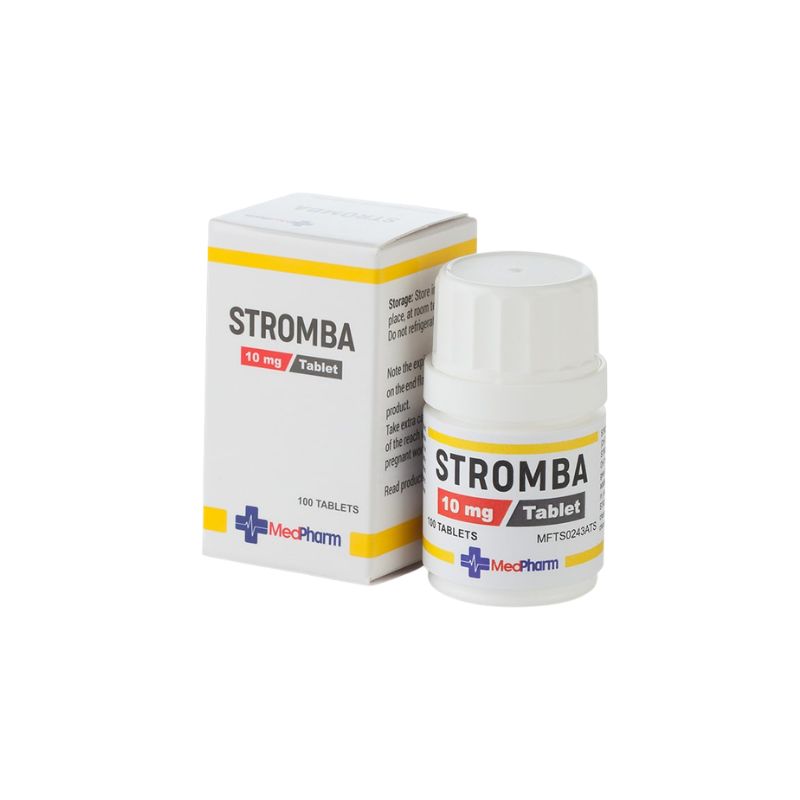 Stromba 10 mg (Stanozolol – Tablets)
Stanozolol has an unusual position in this catalogue: its one approval-grade clinical indication is a skin condition, not a performance outcome, and the research behind it is old, British-to-Serbian, and unusually honest about its own limits. Two of the five papers on this page are double-blind trials. One succeeded on its primary measure and failed on its mechanism measure. The other failed outright. Both are here.
What lipodermatosclerosis is, and why the file is about it
The 1993 review in the Journal of the American Academy of Dermatology is the natural entry point. Lipodermatosclerosis refers to the skin induration and hyperpigmentation of the legs that often occurs in patients who have venous insufficiency. It has also been termed hypodermitis sclerodermiformis, and appears to be similar if not identical to the recently described sclerosing panniculitis of the leg. The review states there has been much confusion about the nature, clinical course and treatment, and that the authors believe it has an acute, inflammatory phase and a chronic, fibrotic stage, although a spectrum exists.
Two things in that review matter for reading any claim about this compound. Direct immunofluorescence studies of early and late lesions are helpful in that they show dermal pericapillary fibrin deposits without other immunoreceptors. And the treatment of lipodermatosclerosis consists of compression therapy with either graded stockings or elastic bandages — with the stanozolol observation stated as an addition to that, in one sentence: we and others have found that the anabolic steroid stanozolol improves this condition rapidly and consistently.
Read that sentence for what it is: a clinical impression from a specialist centre, reported in a discussion paragraph, not a trial result.
The 1991 double-blind trial: the result that splits in half
This is the most rigorous study in the file and the one most often half-quoted. Sixty patients with lipodermatosclerosis were entered into a prospective, double-blind, placebo-controlled, randomized trial in London. The rationale was specific: pericapillary fibrin cuffs have been shown in patients with chronic venous insufficiency, and it has been suggested that this fibrin deposition is responsible for an oxygen diffusion block, leading to local hypoxia and resulting in ulceration. Fibrinolysis is depressed in patients with venous insufficiency, so pharmacological enhancement of this factor might be expected to produce clinical improvement.
The design: stanozolol 5 mg or a placebo tablet twice daily for 6 months, with all patients supplied below-knee German/Swiss specification class 2 graduated compression stockings. The area of lipodermatosclerosis was measured monthly, and transcutaneous oxygen tension within the liposclerotic area every three months.
The results, exactly:
- Control group: mean reduction in area of lipodermatosclerosis of 14 % (95 % CI −2.6 to 31 %).
- Active treatment: 28 % (95 % CI 5.3 to 46 %).
- Transcutaneous oxygen measurements showed no change in either group.
- Side effects were significantly more common in the active treatment group (P < 0.02, chi-squared).
And the authors’ own conclusion, which is the sentence to carry: although fibrinolytic enhancement caused a reduction in area of lipodermatosclerosis, no evidence of any effect on a possible oxygen diffusion block was indicated.
That is the correct shape of a modest clinical finding. The primary measure moved, the mechanistic measure did not, the control group’s confidence interval crossed zero while the active group’s did not, and the treatment was not free of side effects. Every one of those qualifiers belongs in any honest retelling of this study.
The 1984 double-blind trial: the one that failed
Stanozolol’s second blind trial ran the other way, and it is worth having both on one page. The hypothesis was that fibrinolytic shutdown may be important in the development of postoperative deep vein thrombosis. The trial randomised 60 patients in a double-blind controlled design to intramuscular stanozolol or placebo, 50 mg given 24 hours before elective abdominal surgery, with DVT detected by leg scanning and confirmed by venography.
The pharmacology worked: a significant decrease in plasminogen activator activity was confirmed in the placebo group, while stanozolol caused a significant increase in plasminogen activator activity on the first postoperative day. Patients in either group who did not develop DVT showed minimal changes.
The clinical outcome did not:
- Scan-positive DVT occurred in 11 of 31 placebo patients (35 %) and 12 of 29 who received stanozolol (41 %).
The authors’ conclusion: prevention of fibrinolytic shutdown by this regimen of stanozolol does not prevent postoperative DVT, and further studies are required to clarify the relationship of postoperative fibrinolysis and DVT.
A drug that demonstrably improved the coagulation marker it was aimed at, and did not change the clinical event, is a textbook example of why the 1991 trial’s null transcutaneous-oxygen result should be taken seriously rather than explained away.
The uncontrolled studies, which is most of the rest
Beyond those two trials, the rest of the file is uncontrolled and should be labelled as such.
The 2008 open clinical trial in Dermatology Online Journal enrolled 17 patients with acute lipodermatosclerosis — the painful counterpart of the chronic form, a severe-pain condition in which patients are frequently unable to tolerate compression therapy. All had superficial venous insufficiency on duplex scan with incompetent perforators under the affected area. Stanozolol 2 mg twice daily for 8 weeks: mean pain scores fell from 7 ± 2 (range 4–10) to 3 ± 2 (range 0–5), p < 0.001, dermal thickness was significantly reduced (p < 0.01), and no side effects were noted. Seventeen patients, no comparator, no blinding, self-reported pain as the headline.
The 2019 case report in the Journal of Vascular Brazil describes the substitution problem in one sentence: a 61-year-old woman with acute lipodermatosclerosis and a history of surgical treatment for venous insufficiency was treated initially with stanozolol and pentoxifylline, with good response, and was then switched to oxandrolone due to unavailability of stanozolol. The switch was well tolerated and reduced oedema, erythema and infiltration, with pain relief — which is a case report about an alternative, not evidence for the original.
What this record does not show
Not a tissue-oxygen effect. The 1991 trial found no change in transcutaneous oxygen tension in either group, and its authors said so plainly.
Not a thrombosis-prevention effect. The 1984 double-blind trial found more DVT in the active arm, 41 % against 35 %, despite a significant improvement in plasminogen activator activity.
Not a free intervention. Side effects were significantly more common on active treatment in the 1991 trial (P < 0.02).
Not a strong evidence base. One 60-patient trial with a split result, one 60-patient trial that failed, one 17-patient open study, one case report.
Not comparable across the literature. The studies used 5 mg twice daily orally, 2 mg twice daily orally, and 50 mg intramuscularly. Those are three different exposures described in three different clinical contexts, and this page reports them as study facts, not as anything to do with a product strength.
What we supply
Stanozolol, as supplied by the manufacturer, tracked, from inside the EU. Batch documentation for any product that carries it is explained in the COA guide linked from the product page.
Two blind trials, a mechanism claim that did not survive its own test, and a specialist impression in a discussion paragraph — that is the file, and it is more informative than most product pages will tell you. Research use only. This page summarises published clinical literature for research reference. It is not medical advice and not a suggestion for human use. Nothing we supply is for human or veterinary use.
References.
- Kirsner RS, Pardes JB, Eaglstein WH, Falanga V. The clinical spectrum of lipodermatosclerosis. J Am Acad Dermatol 1993;28(4):623-627 (PMID 8463465).
- McMullin GM, Watkin GT, Coleridge Smith PD, Scurr JH. Efficacy of fibrinolytic enhancement with stanozolol in the treatment of venous insufficiency. Aust N Z J Surg 1991;61(4):306-309 (PMID 2018441).
- Blamey SL, McArdle BM, Burns P, Carter DC, Lowe GD, Forbes CD. A double-blind trial of intramuscular stanozolol in the prevention of postoperative deep vein thrombosis following elective abdominal surgery. Thromb Haemost 1984;51(1):71-74 (PMID 6539002).
- Vesić S, Vuković J, Medenica LJ, Pavlović MD. Acute lipodermatosclerosis: an open clinical trial of stanozolol in patients unable to sustain compression therapy. Dermatol Online J 2008;14(2):1 (PMID 18700104).
- Péret LA, Vidal HM, Gomes GAC, Oliveira GVB, Aguiar LM. Oxandrolone for treatment of lipodermatosclerosis: case report. J Vasc Bras 2019;18:e20190031 (PMID 31723343).