
HCG alone or HCG plus FSH? What the studies measured
Hypogonadotropic hypogonadism is one of the few treatable causes of male infertility, and the protocol question is old: HCG by itself, or HCG with FSH from the start. A 2025 meta-analysis of 41 studies gives the clearest answer yet.
1 October 2026 · 3 min read
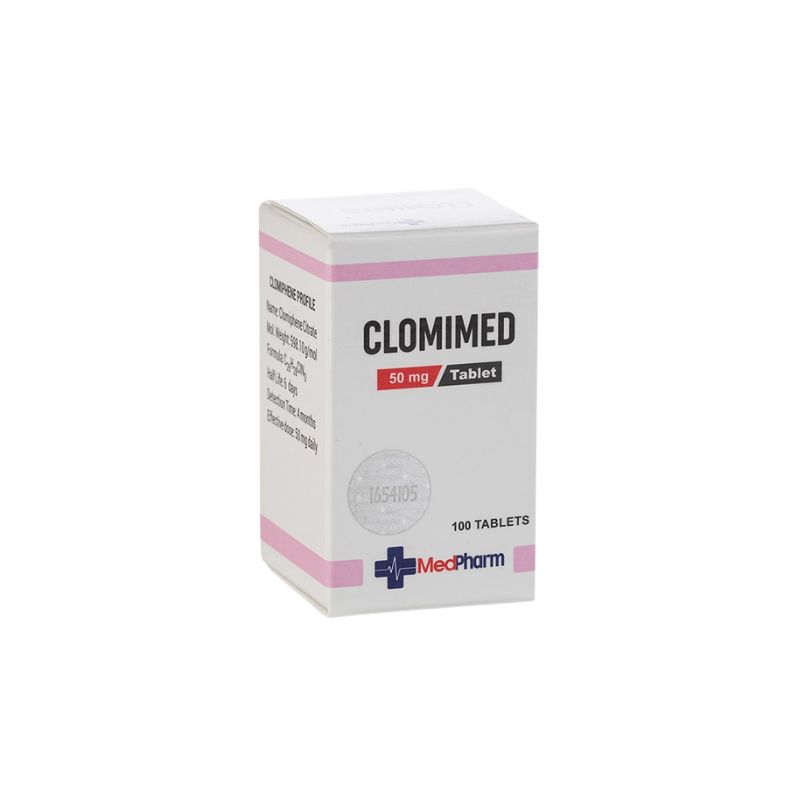 Clomimed (Clomiphene 50 mg)
Men with hypogonadotropic hypogonadism are usually azoospermic: no sperm in the ejaculate, because the pituitary signal that drives sperm production never arrives. It is one of the few infertility diagnoses with a treatment that follows the physiology directly. Replace the missing gonadotropins and spermatogenesis often restarts. The open question is the shape of the protocol, not the principle: human chorionic gonadotropin by itself, or HCG with follicle-stimulating hormone from the start. Three papers frame the answer — one review, one meta-analysis, and the trial that draws the line between induction and replacement.
Monotherapy works when the testes already grew once
Prior and colleagues reviewed the induction protocols in 2018, and their split by diagnosis is the most cited distinction in this field. Previously virilised men with adult-onset hypogonadotropic hypogonadism and normal testicular volume respond well to monotherapy, in which HCG acts as a long-acting LH analogue that stimulates spermatogenesis. For men with congenital disease such as Kallmann syndrome, the same approach rarely succeeds, and combined therapy with HCG plus FSH is described as an absolute requirement to maximise fertility potential.
The review names three baseline predictors of successful induction: prior spontaneous testicular development with a testicular volume above 4 mL, serum inhibin B above 60 pg/mL, and no history of undescended testes. Read plainly, the testes keep a memory of having developed. Where that memory exists, one signal restarts them. Where it never formed, two signals are needed.
The pooled numbers favour the combination for sperm output
Muir and colleagues meta-analysed the field in 2025: 41 studies, 1,673 patients with a mean age of 25, and a median treatment duration of 18 months. Mean sperm concentration after treatment was 11.6 million per mL of ejaculate. The threshold ladder shows the spread: concentrations above zero in 78% of patients, above 1 in 55%, above 5 in 36%, above 10 in 24%, and above 20 in 15%.
Mean sperm output and the share of patients reaching every threshold were significantly greater after combined HCG and FSH treatment than after HCG monotherapy. The contrast that sharpens the result is what did not differ: treatment-related increases in testosterone and testicular volume were the same on one drug or two. The extra FSH bought sperm, not size or serum androgen. Patients with congenital disease also produced significantly less sperm than patients with hypopituitarism or mixed cohorts, which matches the review above.
Note the timescale folded into those averages. Eighteen months is the median, and the thresholds above are concentrations, the lab readout, not pregnancies. The authors say plainly that outputs consistent with natural conception were the less common outcome.
Why replacement is not induction
Kim and colleagues ran the trial that draws the other boundary. Two parallel phase III studies, ZA-304 and ZA-305, randomised overweight men aged 18 to 60 with secondary hypogonadism to enclomiphene or testosterone gel for 16 weeks. Entry meant morning total testosterone at or below 300 ng/dL with low or normal LH. Testosterone rose in every arm. LH and FSH rose on enclomiphene and fell on gel. Sperm concentrations stayed in the normal range on enclomiphene while spermatogenesis fell markedly on gel.
That is the mechanism made visible. One path restores the signal and keeps the factory running; the other replaces the product and shuts the factory down. The SERM preparation in this catalogue is Clomimed. For the signal at the very top of the same axis, the kisspeptin piece covers the switch that starts the cascade: Kisspeptin and the HPG axis.
What the data do not show
Pregnancies. Most included studies end at sperm counts, and the meta-analysis authors flag that conception-grade outputs were achieved by a minority. The timelines are long, a year and a half at the median, and congenital cases respond worse than acquired ones on every metric. Nothing here describes a preparation, an amount or a schedule, and the enclomiphene contrast comes from overweight secondarily hypogonadal men, not from hypogonadotropic patients.
What we supply
Clomimed, as supplied by the manufacturer, tracked, from inside the EU. This catalogue carries no HCG preparation, so the HCG figures above are literature only. Batch documentation for every product that carries any is explained in the COA guide linked from the product page.
Research use only. This page summarises published reviews, a meta-analysis and randomised trials for research reference. It is not medical advice and not a suggestion for human use. Nothing we supply is for human or veterinary use.
References.
- Muir CA, et al. Efficacy of Gonadotropin Treatment for Induction of Spermatogenesis in Men With Pathologic Gonadotropin Deficiency: A Meta-Analysis. Clin Endocrinol 2025;102(2):167-177 (PMID 39445789).
- Prior M, Stewart J, McEleny K. Fertility induction in hypogonadotropic hypogonadal men. Clin Endocrinol 2018;89(6):712-718 (PMID 30194850).
- Kim ED, et al. Oral enclomiphene citrate raises testosterone and preserves sperm counts in obese hypogonadal men, unlike topical testosterone: restoration instead of replacement. BJU Int 2016;117(4):677-685 (PMID 26496621).


