Oxymetholone and the anaemia record: the drug's real history is haematology
Before oxymetholone was a gym compound it was the oral androgen in the treatment of aplastic anaemia. A 1993 European randomised trial found adding it to antilymphocyte globulin raised the four-month response from 40% to 56%. The 2023 health-economic data say the same drug costs about a fifth as much and still buys more transfusions, more hospital admissions and a lower survival rate.
10 November 2026 · 5 min read
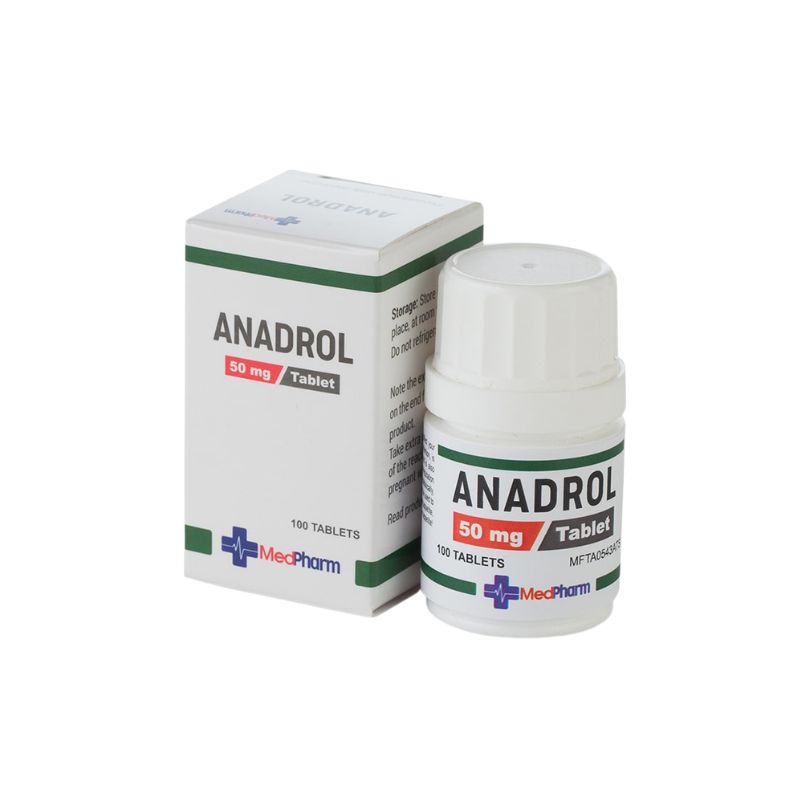 Anadrol 50 mg (Oxymetholone – Tablets)
Anadrol is the trade name most people know oxymetholone by, and the indirection is itself the story. The compound’s actual therapeutic history is not a bodybuilding history at all — it is a haematology history, running from the mid-1970s to the 1990s, in a disease called aplastic anaemia, where the oral androgen of choice was, in the words of a 1978 review, predominantly oxymetholone. The rest of this page is that record, because it is a far better-documented and more honest thing to read than anything written about the drug afterwards.
The claim that started it
Aplastic anaemia is bone marrow failure. The 1978 review by Gordon Gardner sets out the state of knowledge at the moment oxymetholone was standard. It notes that the young patient with aplastic anaemia who has a compatible marrow donor can obtain a successful graft, especially if sex matched, but that only a small number of patients will have such donors available. Immunosuppressive therapy was considered as an alternative, with high risk in older patients. Against that background it makes the central historical claim:
Past studies with androgen therapy have reported a response rate at one year similar to the current recovery rates with bone marrow transplantation. However, contemporary reports have indicated a marked decrease in the recovery rate following androgens.
That sentence is the entire arc of the drug’s clinical career in one paragraph, and it is unusually honest for 1978. The review also attributes part of the decline to methodology rather than to the drug — to an inadequate evaluation of residual marrow function in the patient — and warns that supportive transfusion should be provided especially in the first three months of androgen treatment. It closes by noting that most historical patients received only oral androgens, predominantly oxymetholone, and that other androgens might work better in a particular patient.
The randomised evidence, which is small and pointed
Two of the three clinical studies below randomise, and they disagree in an informative way. The third is a single-arm series, so it carries no comparator and no P value.
The European trial that found a difference. A 1993 randomised study from the EBMT severe aplastic anaemia working party gave 134 patients antilymphocyte globulin and methylprednisolone, and randomised them to receive oxymetholone or not. Early mortality under 120 days was identical in both arms — 12/69 (17 %) against 11/65 (17 %). The response rate at 120 days was significantly greater with androgens, 56 % against 40 %, P = 0.04; among patients who survived to 120 days, 68 % against 48 %, P = 0.02; and in females with neutrophil counts below 0.5 × 10⁹/l, 78 % against 27 %, P = 0.03. Survival overall was comparable at 71 % against 65 %.
Read that carefully. The benefit showed up in response, not in survival, and it was concentrated in one subgroup. The authors’ own conclusion says the same: the addition of androgens significantly improves the response rate at four months, particularly in females with low neutrophil counts, although there is no significant effect on short-term survival. They also record that side-effects including biochemical abnormalities and virilisation could be controlled and were reversible.
The American trial that found no difference. A 1992 prospective randomised two-arm study in Blood compared ATG with a lower-dose methylprednisolone plus oxymetholone against ATG with a very high-dose methylprednisolone plus oxymetholone — the same drug in both arms, with the steroid schedule as the variable. Among the 64 evaluable patients, 12 of 33 (36 %) on the lower-dose schedule had complete, partial or minimal responses against 15 of 31 (48 %) on the higher-dose schedule, P = .33. Actuarial four-year survival was 43 % against 47 %, P = .99. The authors were explicit that they could not show a significant difference in toxicity, response rate or survival.
The single-arm series. A 1987 series of 46 patients given ATG, high-dose methylprednisolone and oxymetholone reported a complete or partial haematological response in 19 patients (41 %), with three-year actuarial survival of 65 %. It also reports the drug’s own toxicity in a way the randomised trials cannot: studies of elevated liver function necessitated discontinuation of androgen therapy in eight patients.
The 2004 Blood long-term outcome series from a French transplant centre adds the reason pre-treatment matters. In 133 patients receiving non-T-cell-depleted allogeneic transplantation from an HLA-identical sibling donor, the four factors associated with lower survival were older age, use of cyclophosphamide with thoracoabdominal irradiation, any form of treatment prior to transplantation (either androgens or immunosuppressive therapy), and grade II to IV acute graft-versus-host disease. Androgens in that dataset are not presented as a cause of the worse outcome; they are presented as a marker of a more difficult course.
What the drug is worth, in the only modern analysis
Oxymetholone’s place in modern practice was examined directly in a 2023 cost-effectiveness study from Thailand, using patients with severe and very severe acquired aplastic anaemia treated between 2004 and 2018, comparing rabbit ATG with cyclosporine against oxymetholone.
At two years of follow-up, total mean direct medical expenditure per patient was $8 514.48 for oxymetholone against $41 070.88 for the ATG combination — but oxymetholone had a significantly lower survival rate (P = .001), higher second-year transfusion need (71.4 % against 18.2 %) and higher hospitalisation (14.3 % against 0 %). The incremental cost-effectiveness ratio was $45 854.08 per life-year gained for the ATG combination. The authors’ conclusion is that oxymetholone remains a viable alternative in a resource-limited country, while preferring the ATG combination for its advantages on mortality, complications and hospitalisation.
That is a complete and contemporary picture of the drug’s status in medicine: cheap, effective enough to raise a response rate in a well-selected subgroup, inferior on survival, and good enough that a health system under budget pressure still uses it.
What this record does not show
Not a bodybuilding record. Every trial on this page enrolled people with aplastic anaemia. None measured muscle mass, strength or body composition in a healthy person.
Not a survival benefit. The best randomised evidence found a response benefit and no significant survival effect. Saying otherwise inverts the trial.
Not a benign drug. The 1987 series discontinued androgen therapy in eight of 46 patients for elevated liver function, and the 1993 trial records biochemical abnormalities and virilisation alongside a benefit.
Not a transplant substitute. Gardner’s 1978 review is careful that transplantation is the option with a compatible donor, and the 2004 series identifies prior androgen treatment as one of four markers of a worse post-transplant course.
What we supply
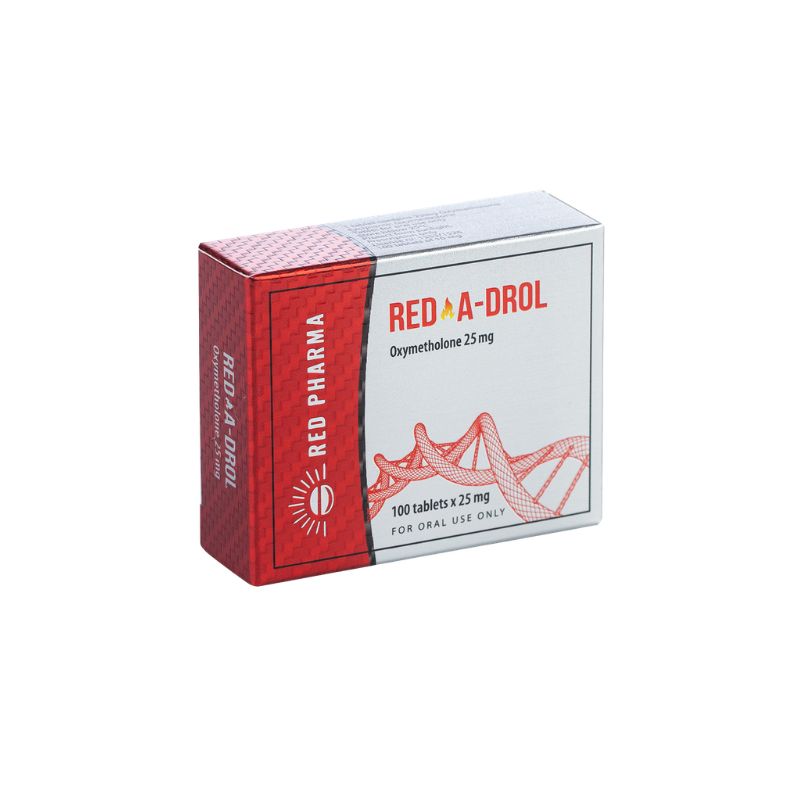
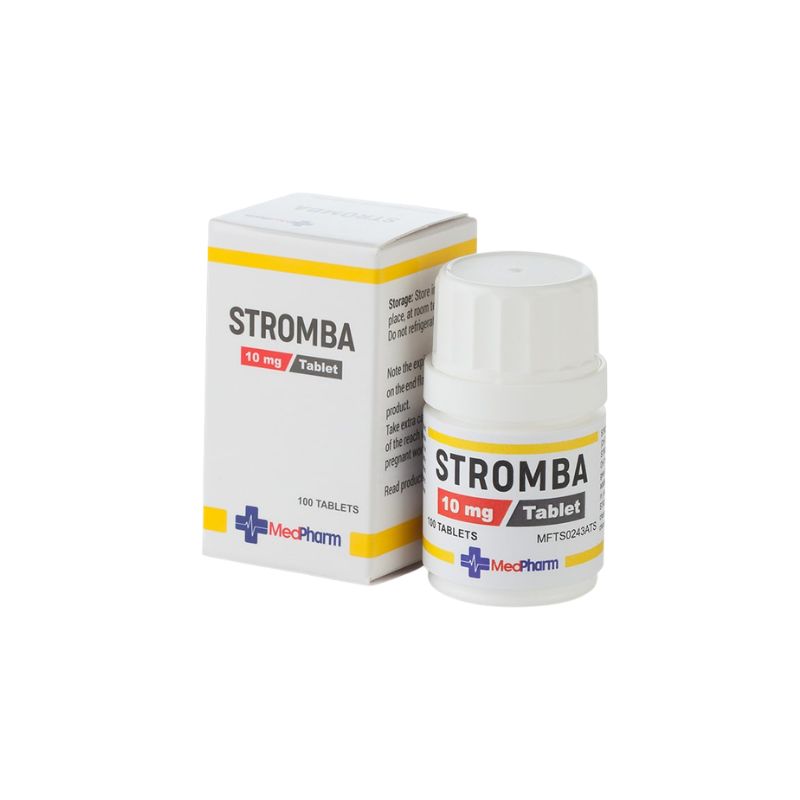
Anadrol 50 mg and RED A-DROL, oxymetholone tablets as supplied by the manufacturer, tracked, from inside the EU. Batch documentation for any product that carries it is explained in the COA guide linked from the product page.
The useful thing about a drug with this history is that the evidence is old, published, and specific. Every number above comes from a named trial with a named denominator. Research use only. This page summarises published haematology trials for research reference. It is not medical advice and not a suggestion for human use. Nothing we supply is for human or veterinary use.
References.
- Bacigalupo A, Chaple M, Hows J, Van Lint MT, McCann S, Milligan D, et al. Treatment of aplastic anaemia (AA) with antilymphocyte globulin (ALG) and methylprednisolone (MPred) with or without androgens: a randomized trial from the EBMT SAA working party. Br J Haematol 1993;83(1):145-151 (PMID 8435323).
- Doney K, Pepe M, Storb R, Bryant E, Anasetti C, Appelbaum FR, et al. Immunosuppressive therapy of aplastic anemia: results of a prospective, randomized trial of antithymocyte globulin (ATG), methylprednisolone, and oxymetholone to ATG, very high-dose methylprednisolone, and oxymetholone. Blood 1992;79(10):2566-2571 (PMID 1586708).
- Gardner FH. Androgen therapy of aplastic anaemia. Clin Haematol 1978;7(3):571-585 (PMID 363329).
- Doney K, Storb R, Buckner CD, McGuffin R, Witherspoon R, Deeg HJ, et al. Treatment of aplastic anemia with antithymocyte globulin, high-dose corticosteroids, and androgens. Exp Hematol 1987;15(3):239-242 (PMID 3493172).
- Penthinapong T, Saelue P, Sripakdee W, Doungngern T, Tanvejsilp P. Real-world costs and cost-effectiveness analysis of rabbit-antithymocyte globulin versus oxymetholone in acquired aplastic anemia in Thailand. Value Health Reg Issues 2023;37:97-104 (PMID 37393722).
- Ades L, Mary JY, Robin M, Ferry C, Porcher R, Esperou H, et al. Long-term outcome after bone marrow transplantation for severe aplastic anemia. Blood 2004;103(7):2490-2497 (PMID 14656884).