Anastrozole vs exemestane: two evidence worlds
One drug is measured in sperm counts and the other in tumour response. The single head-to-head is in one disease, and its authors call it inconclusive.
5 October 2026 · 7 min read
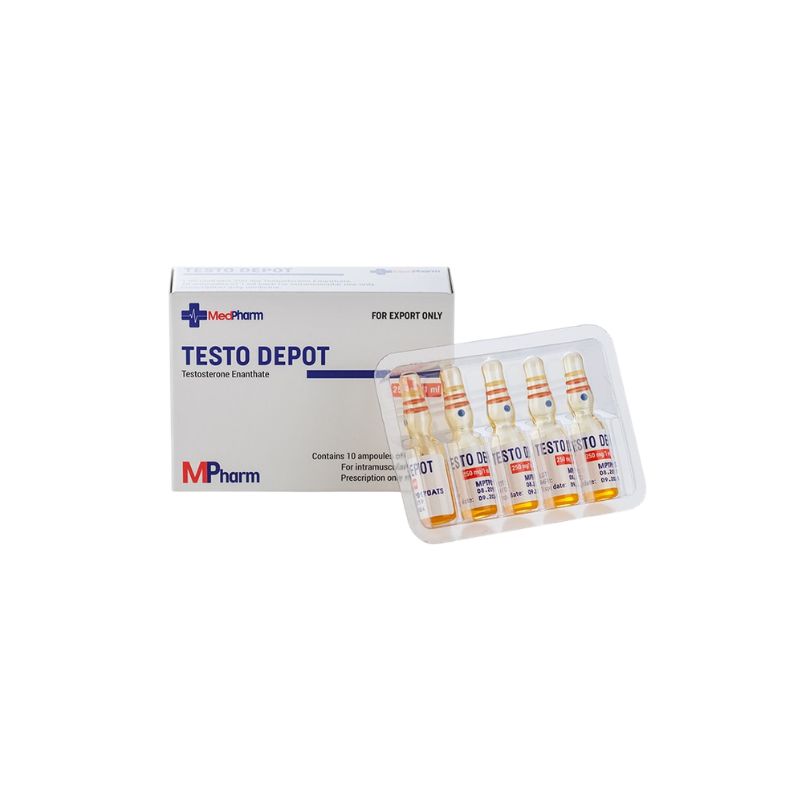 Testo Depot (Testosterone Enanthate)
Ask these two molecules apart and people usually end up quoting a number from one of them to the other. That is the mistake. Anastrozole is a nonsteroidal aromatase inhibitor with a large randomised literature in breast cancer and a small, uncontrolled, off-label literature in men. Exemestane is a steroidal one with a large randomised literature in breast cancer and essentially nothing beyond it in men. Almost every comparison anyone quotes mixes those two rows.
The one head-to-head that exists, and the sentence that limits it
There is exactly one randomised double-blind trial of exemestane against anastrozole, and it is worth reading closely because of how it ends. It enrolled 298 postmenopausal Japanese women with hormone-receptor-positive advanced breast cancer, 149 on exemestane 25 mg once daily with a mean age of 63.4, 149 on anastrozole 1 mg once daily with a mean age of 64.0.
The primary endpoint was time to progression, read by an expert radiologic images review committee: a median of 13.8 months for exemestane against 11.1 months for anastrozole, hazard ratio 1.007 with a 95% confidence interval from 0.771 to 1.317. Investigator-assessed time to progression was 13.8 against 13.7 months, hazard ratio 1.059 (0.816, 1.374). Median overall survival was 60.1 months in the anastrozole arm and had not been reached in the exemestane arm at data cutoff, which is a follow-up statement, not a result. Objective response rate was 43.9% against 39.1%. Treatment-related grade three or worse adverse events were 9.4% against 6.0%.
Then the sentence that decides how the whole thing is read: efficacy and safety profiles were similar, but non-inferiority of exemestane versus anastrozole was not confirmed. Similar is not equivalent. One disease, one country, 298 people, one reading of the scan.
Where the breast cancer numbers come from, and why they cannot be split
The large pooled analysis everyone cites is 7030 premenopausal women with ER-positive early breast cancer, from four randomised trials, median follow-up 8.0 years. Aromatase inhibitors as a group beat tamoxifen on recurrence, rate ratio 0.79 (0.69 to 0.90), with the benefit entirely in the first four years, 6.9% against 10.1% five-year recurrence. Distant recurrence was also reduced, rate ratio 0.83 (0.71 to 0.97). Breast cancer mortality did not differ, rate ratio 1.01 (0.82 to 1.24), and neither did all-cause mortality, 1.04 (0.86 to 1.27). Fractures were 6.4% in 3528 women allocated an aromatase inhibitor and 5.1% in 3502 allocated tamoxifen, rate ratio 1.27 (1.04 to 1.54).
Read the design note before the numbers. Three drugs were pooled, anastrozole, exemestane and letrozole, and a fourth, tamoxifen, was the comparator. Nothing in that analysis can tell you which member of the class produced the recurrence reduction or the fracture excess. If a supplier quotes it as an exemestane figure, the source does not support it.
The men: what was actually measured
The male literature measures a ratio, then follows it into a semen sample. The largest dataset is 140 subfertile men with abnormal baseline testosterone-to-estradiol ratios, treated without a control arm and compared within themselves. On anastrozole the ratio went from 7.2 to 18.1 with a p below 0.001, and in 25 of them with semen analysis available, sperm concentration went from 5.5 to 15.6 million per millilitre with a p below 0.001, and the motility index from 832.8 to 2930.8 million motile sperm per ejaculate with p below 0.005. Testolactone produced similar semen changes and a ratio shift from 5.3 to 12.4.
Two design facts matter more than the numbers. Every one of those figures is a within-group change with no comparator, so the paper cannot separate the drug from time, from the selection of men with an abnormal ratio to begin with, or from regression to the mean. And the hormonal improvement was absent in the Klinefelter subgroup under anastrozole, which is the sort of subgroup result that a randomised design would have been built around in advance.
The 2022 review of this field puts the framing itself: because of the lack of large-scale randomised controlled studies, the efficacy and safety of aromatase inhibitors in male infertility remain controversial, and their use in men has been off-label and empirical for decades. It also notes that polymorphisms of the aromatase gene CYP19A1 change hormone profiles, semen quality and how well these drugs work, which is a mechanism for two men on the same drug getting different results.
What a controlled male trial measures instead
There is one clean randomised dataset in men, and it did not measure a hormone. It measured whether a symptom happened at a visit. Two trials run sequentially between 2004 and 2011 enrolled healthy men aged 20 to 50 with normal testosterone. The first cohort of 198 had gonadal steroids suppressed and then took one of four testosterone gel strengths, 1.25, 2.5, 5 or 10 g, or placebo, for 16 weeks. The second cohort of 202 got the same plus anastrozole to block aromatisation. Vasomotor symptoms were reported at 26% of visits in the first cohort and 35% in the second. Within the first cohort, the largest gap was between the men with estradiol in the 5 to 9.9 range and those at 10 to 14.9, 38% against 16%.
So the controlled evidence says estradiol deficiency is the key mediator of that symptom in hypogonadal men, and the measurement that established it is the incidence of a symptom at a visit. That is a different order of evidence from a ratio shifting in a cohort of 140 without a comparator, and the two are not interchangeable.
Bone, and the structural difference
Both drugs share one well-documented cost. A Belgian Bone Club consensus treats bone loss from aromatase inhibition as a class effect, in steroidal and non-steroidal agents alike, at 4% to 5% over two years, with the risk of a clinical fracture 35% to 50% higher than on tamoxifen.
The structural difference is real but it is not a ranking. Exemestane is a type I steroidal inhibitor with an androstenedione-like structure that binds the androgen receptor with low affinity. Anastrozole is a type II non-steroidal, non-competitive inhibitor of aromatase. Different chemistry, same enzyme target.
One last shape-of-the-evidence point. The largest exemestane trial in the literature, the 724-patient everolimus combination study, enrolled patients who had recurrence or progression while on a previous nonsteroidal aromatase inhibitor, letrozole or anastrozole. Much of what is known about exemestane is known about a population that had already been through the other drug. That is a fact about the trial population, not about either molecule.
Where this sits on the shelf
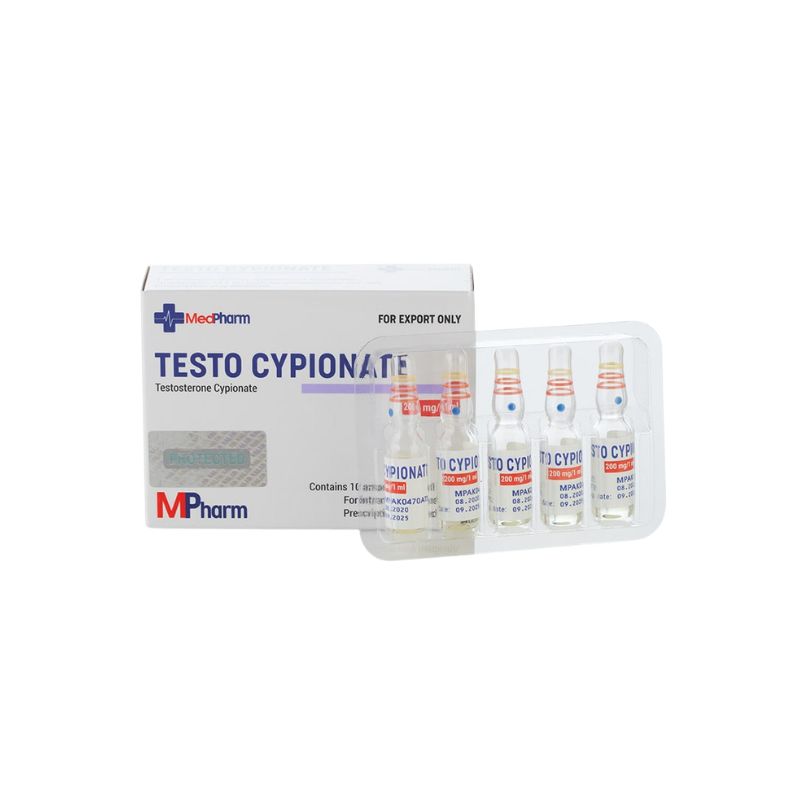
Neither of these two drugs is on this catalogue. What is here is the injectable testosterone class whose circulating levels those male studies tracked, testosterone enanthate and the cypionate ester beside it. For how a label and its warnings read against the same evidence base, oxandrolone is the adjacent document on this desk, and clomiphene in male trials is the other male-fertility dataset with its own measurement problems.
What the data do not show
There is no randomised comparison of anastrozole against exemestane in men, at any endpoint. The only randomised comparison between them is in one disease in one country, and its own authors declined to call it equivalent. There is no control arm in the semen cohort, so its improvements cannot be separated from selection or from time. The pooled breast cancer analysis cannot be split into its three constituent drugs, and it shows no difference in breast cancer mortality, only in recurrence and fractures. The bone signal is a class effect, not a discriminator. No dataset here enrolled men without an abnormal hormone ratio, and no dataset here measures anything outside cancer treatment and male infertility, which is why the numbers cannot be transported anywhere else.
A buyer comparing these two molecules on a number is almost always borrowing it from a different drug, a different sex and a different disease. That is the whole of the useful conclusion, and it is enough to make the next question, which is what a specific measurement actually means in a specific person, a better one.
What we supply
The testosterone preparations above, as supplied by the manufacturer, tracked, from inside the EU. Batch documentation for every product that carries any is explained in the COA guide linked from the product page.
Research use only. This page summarises published trials and evidence syntheses for research reference. It is not medical advice, not a protocol, and not a suggestion for human use. Nothing we supply is for human or veterinary use.
References.
- Iwata H, Masuda N, Ohno S, et al. A randomized, double-blind, controlled study of exemestane versus anastrozole for the first-line treatment of postmenopausal Japanese women with hormone-receptor-positive advanced breast cancer. Breast Cancer Res Treat 2013;139(2):441-51 (PMID 23715630).
- Early Breast Cancer Trialists' Collaborative Group (EBCTCG); Bradley R, Braybrooke J, Gray R, et al. Aromatase inhibitors versus tamoxifen in premenopausal women with oestrogen receptor-positive early-stage breast cancer treated with ovarian suppression: a patient-level meta-analysis of 7030 women from four randomised trials. Lancet Oncol 2022;23(3):382-392 (PMID 35123662).
- Raman JD, Schlegel PN. Aromatase inhibitors for male infertility. J Urol 2002;167(2 Pt 1):624-9 (PMID 11792932).
- Yang C, Li P, Li Z. Clinical application of aromatase inhibitors to treat male infertility. Hum Reprod Update 2021;28(1):30-50 (PMID 34871401).
- Schlegel PN. Aromatase inhibitors for male infertility. Fertil Steril 2012;98(6):1359-62 (PMID 23103016).
- Taylor AP, Lee H, Webb ML, Joffe H, Finkelstein JS. Effects of Testosterone and Estradiol Deficiency on Vasomotor Symptoms in Hypogonadal Men. J Clin Endocrinol Metab 2016;101(9):3479-86 (PMID 27300575).
- Body JJ, Bergmann P, Boonen S, et al. Management of cancer treatment-induced bone loss in early breast and prostate cancer: a consensus paper of the Belgian Bone Club. Osteoporos Int 2007;18(11):1439-50 (PMID 17690930).
- Miki Y, Suzuki T, Sasano H. Aromatase inhibitor and bone. Biomed Pharmacother 2007;61(9):540-2 (PMID 17904790).
- Baselga J, Campone M, Piccart M, et al. Everolimus in postmenopausal hormone-receptor-positive advanced breast cancer. N Engl J Med 2012;366(6):520-9 (PMID 22149876).
- Telford C, Jones N, Livings C, Batson S. Network Meta-Analysis Comparing Overall Survival for Fulvestrant 500 mg Versus Alternative Therapies for Treatment of Postmenopausal, Estrogen Receptor-Positive Advanced Breast Cancer Following Failure on Prior Endocrine Therapy. Clin Breast Cancer 2016;16(3):188-95 (PMID 26971303).