Sildenafil and the eye: what the ophthalmology file holds
Sildenafil is on the list of drugs ophthalmologists name as linked to optic neuropathy, a 2025 nationwide claims analysis found a maculopathy signal for it, and other literature studies it as a retinal therapeutic. Both directions are real; neither is a claim that it helps anyone see better.
5 November 2026 · 4 min read
 Careforce-200 (Sildenafil 200 mg)
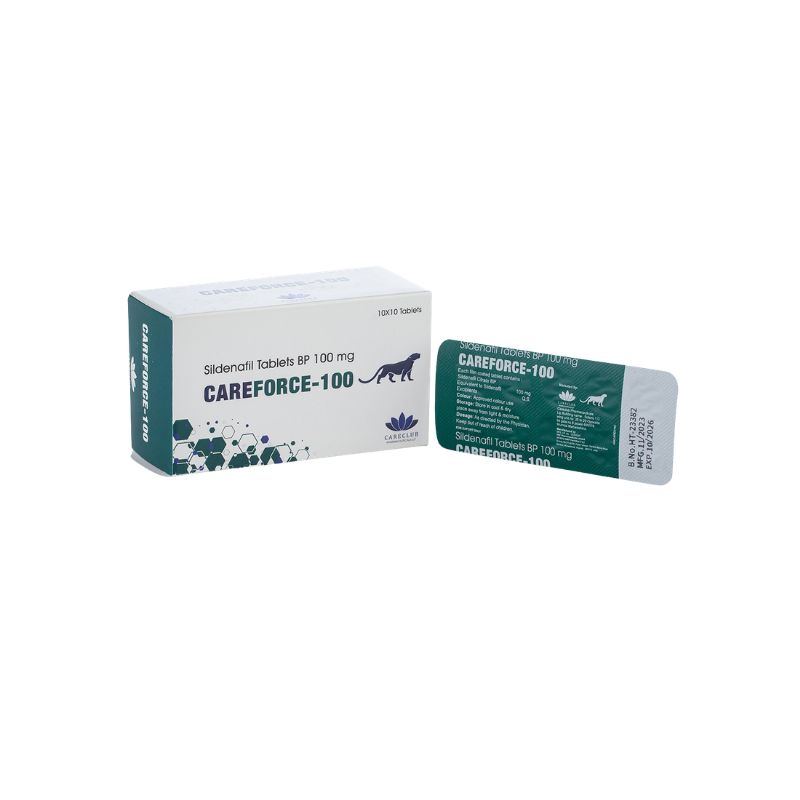
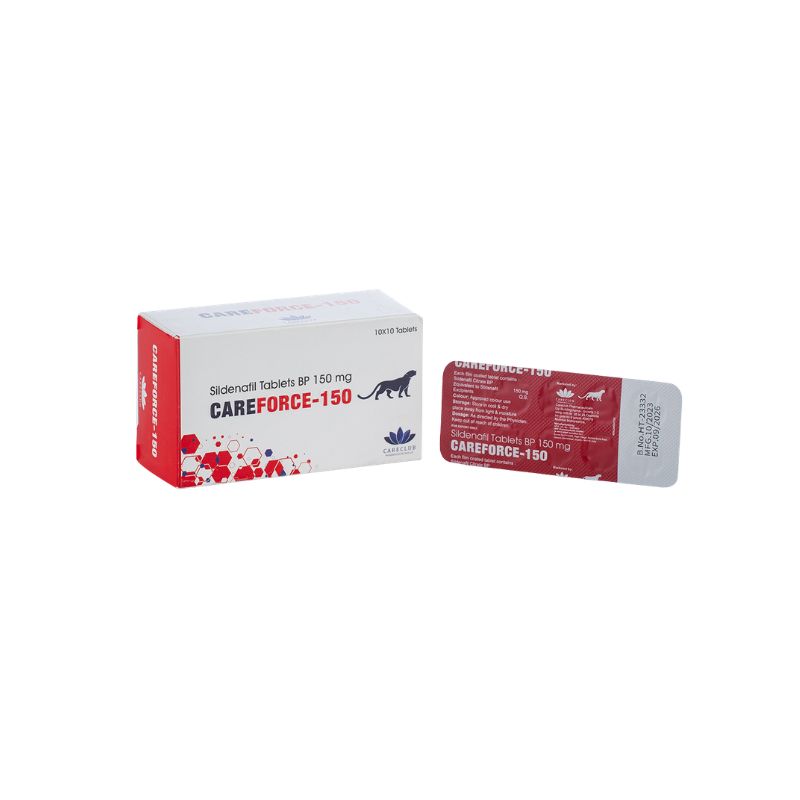
Sildenafil appears in the ophthalmology literature twice, in opposite directions, and anyone who reads only one of them will get a false picture. It is named among the drugs associated with optic nerve disease, and it is being investigated as a retinal therapeutic. The preparations discussed here are the sildenafil citrate strengths supplied in this catalogue — Careforce 200 mg, 100 mg and 150 mg.
The safety side, and the largest dataset on it
The 2007 review of drug-induced optic neuropathies by Lloyd and Fraunfelder groups agents by how much data exists and how often they cause adverse reactions, and names four: amiodarone, ethambutol, linezolid and sildenafil. The clinical point in that review is that toxic and nutritional optic neuropathies offer the opportunity for treatment and restored vision if the offending agent is identified, whereas ischemic and hereditary ones produce profound and often irreversible loss.
The volume of data behind that listing grew a great deal in 2025. A two-part study in JAMA Ophthalmology combined 15,748 maculopathy-related individual case safety reports from the US FDA Adverse Event Reporting System (July 2014 to December 2023) with a population cohort covering approximately 50 million people from the South Korean claims database. Five drugs with underrecognised macular toxic effects emerged among the top 30 signals: fingolimod, apixaban, paclitaxel, ibrutinib and sildenafil.
The cohort numbers are the part worth having:
- Sildenafil incidence rate ratio for maculopathy, post-exposure versus pre-exposure: 2.75 (95 % CI 2.17–3.48)
- Apixaban 3.08 (2.68–3.54); ibrutinib 3.71 (2.58–5.34); paclitaxel 2.85 (1.62–5.02); fingolimod 1.92 (0.62–5.96)
- Cumulative incidence rates ranged from 4.4 % for fingolimod to 15.7 % for apixaban
Two cautions about how to read that. It is a claims-database association study and a pharmacovigilance signal method — the authors’ conclusion is that the approach “identified associations” and identifies sildenafil as having a “possibly underrecognized macular adverse effect”. Associations in observational data of this kind are not the same as a per-user risk estimate, and the confidence intervals differ in width between drugs for a reason. But this is no longer a case-series anecdote: a drug that millions of men take has now been tested against a national claims database specifically for retinal outcomes.
The historical entry point is older and smaller. The first report in the field, in The Lancet in 1999, was a letter on retinal side-effects, and that is the origin of the visual-tint literature that follows.
The mechanism behind the visual effect
The 2022 update in Survey of Ophthalmology is the cleanest statement of the pharmacology. Sildenafil elevates cGMP to relax smooth muscle, and it “has 10 % activity against PDE6, a key enzyme in phototransduction cascade in the retina”. That off-target activity is why transient visual tint and light sensitivity occur.
The same enzyme is the reason the retinitis pigmentosa caution recurs throughout this literature: PDE6 is the gene family mutated in the common forms of the disease, so the compound under study inhibits the enzyme that the disease is caused by. The review lists among potential deleterious effects central serous chorioretinopathy, glaucoma, ischemic optic neuropathy, and “risks to recessive carriers of retinitis pigmentosa”, and among potential beneficial effects ameliorating choroidal ischemia, preventing thickening of Bruch’s membrane, and promoting recovery of the ellipsoid zone in macular degeneration.
Potentially deleterious, potentially beneficial, in the same sentence pair. That is the state of the field.
The therapeutic direction is being tested, not established
The other side of the literature is not speculative in the way it looks: PISCES was a prospective trial looking at the impact of sildenafil on chronic central serous chorioretinopathy, published in Ophthalmology Retina in 2020. A dedicated prospective trial for a retinal indication is a much stronger signal than a case series, and it is also a reminder that the direction of the association can flip in a given indication — chronic central serous chorioretinopathy appears on both the adverse list and the therapeutic list of the 2022 review.
What the update reports on the therapeutic side is largely physiology measured in people who took the drug for another reason: choroidal thickness is increased, choroidal perfusion is enhanced by autoregulatory mechanisms that depend on age and microvascular abnormalities, and high intraocular pressure via a parallel pathway from increased choroidal volume and blood flow to the ciliary body “have challenged previous concepts”.
What the data do not show
- No trial shows sildenafil improves vision, visual acuity or a retinal disease outcome. The beneficial effects in this literature are described as potential, and the one dedicated prospective trial in a retinal indication is a report, not a demonstrated benefit.
- The measurable retinal effects are haemodynamic and electrophysiological — choroidal thickness, perfusion, intraocular pressure — not outcomes.
- The maculopathy figures are observational. An incidence rate ratio of 2.75 from a claims database describes an association in a treated population; it is not a per-user risk number, and the study is not a causal trial.
- The 10 % PDE6 figure explains the visual side effect, not a damage mechanism with a quantified rate.
- Nothing on this page is advice. The milligram figures are product strengths, not recommendations; nothing supplied here is a treatment for a diagnosed condition, and nothing here tells anyone to take or avoid any product.
For the erectile-dysfunction evidence itself — 27 trials and 6,659 men — see the sildenafil trials in order.
References.
- Lloyd MJ, Fraunfelder FW. Drug-induced optic neuropathies. Drugs Today (Barc) 2007;43(11):827-836 (PMID 18174968).
- Arora S, Surakiatchanukul T, Arora T, Cagini C, Lupidi M, Chhablani J. Sildenafil in ophthalmology: an update. Surv Ophthalmol 2022;67(2):463-487 (PMID 34175342).
- Kim J, Ahn SJ, Park J, Gower EW, Chung JE. Systemic drugs associated with maculopathy. JAMA Ophthalmol 2025;143(11):946-952 (PMID 41129146).
- Breazzano MP, Coleman DJ, Chen RWS, Chang S, Daly S, Tsang SH. Prospective impact of sildenafil on chronic central serous chorioretinopathy: PISCES trial. Ophthalmol Retina 2020;4(11):1119-1123 (PMID 32525054).
- Vobig MA. Retinal side-effects of sildenafil. Lancet 1999;353(9162):1442 (PMID 10227246).